Unnatural History Museum Of Singapore Marks SG60 In A Most Unusual Way
In 2025, Singapore turned 60. Amidst a wash of celebrations big and small, we wanted to offer a different narrative instead of the usual commemoration of milestones and achievements.
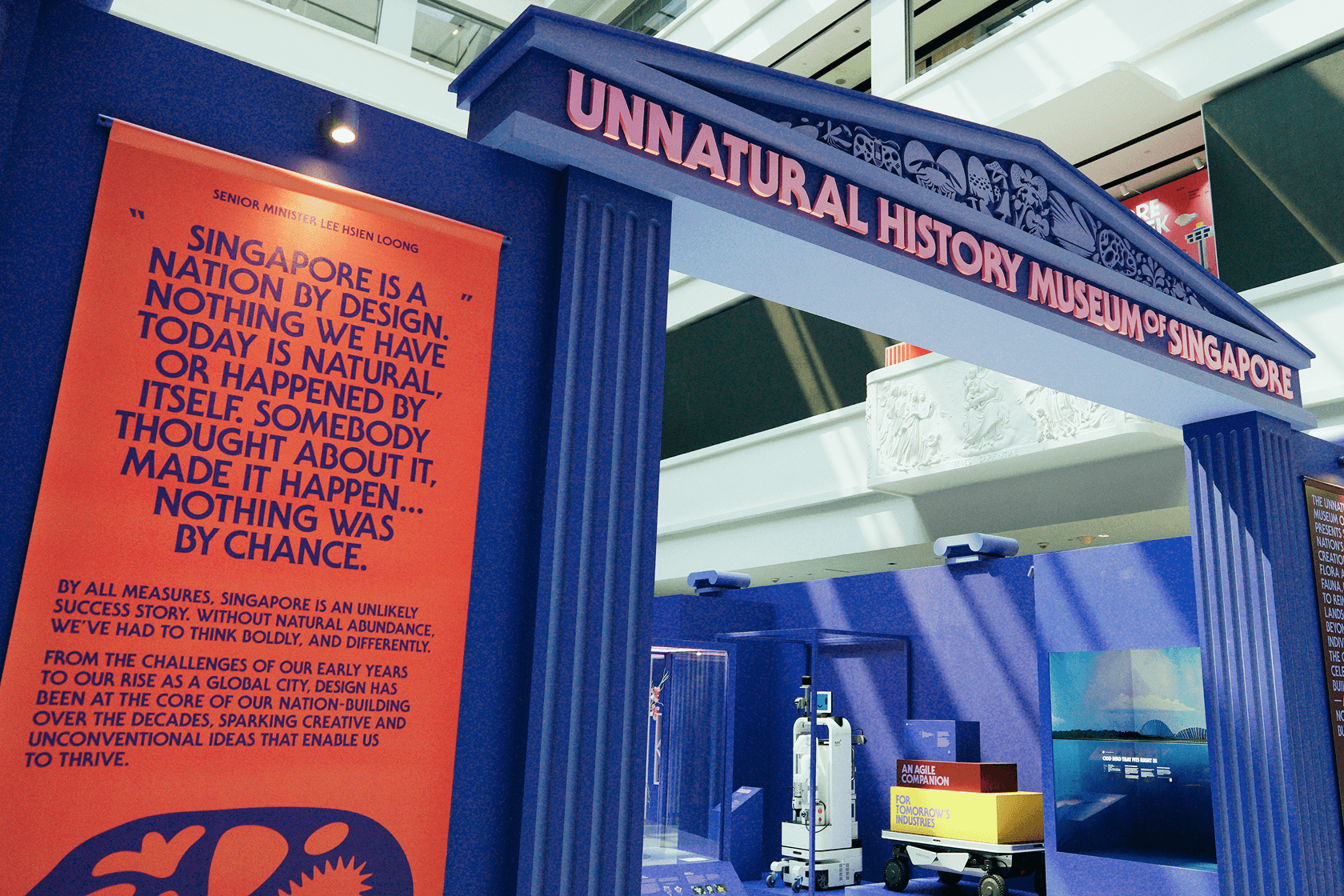
“Singapore is a nation by design. Nothing we have today is natural, or happened by itself...”
Inspired by what then Prime Minister Lee Hsien Loong said, we hit upon an idea that would bring Singapore’s unusual progress to the fore.
Welcome to the
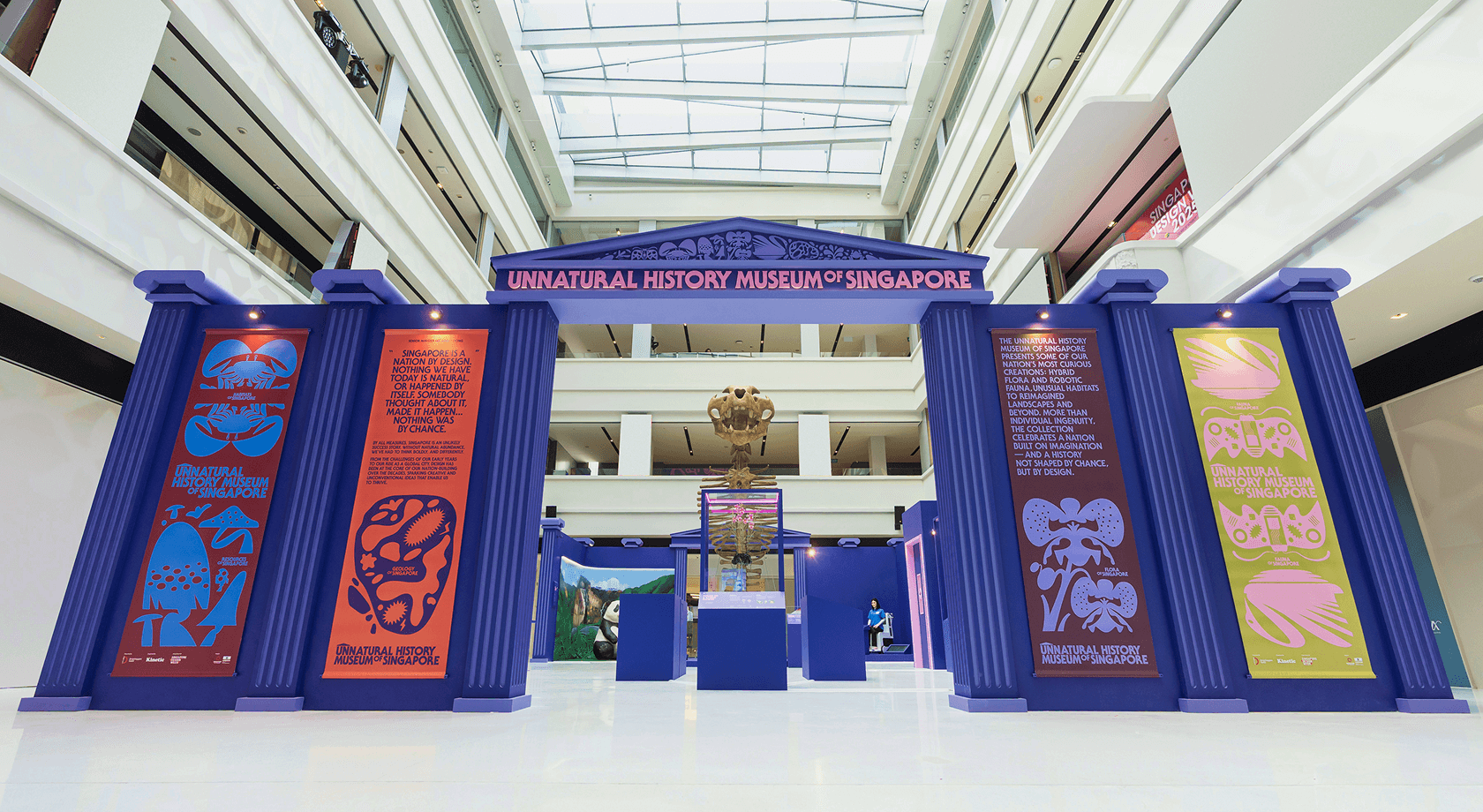
Unnatural History Museum
of Singapore
An exhibition that shines the spotlight on Singapore’s unconventional solutions to challenges, giving insights into how the young nation has managed to thrive despite a lack of natural resources.
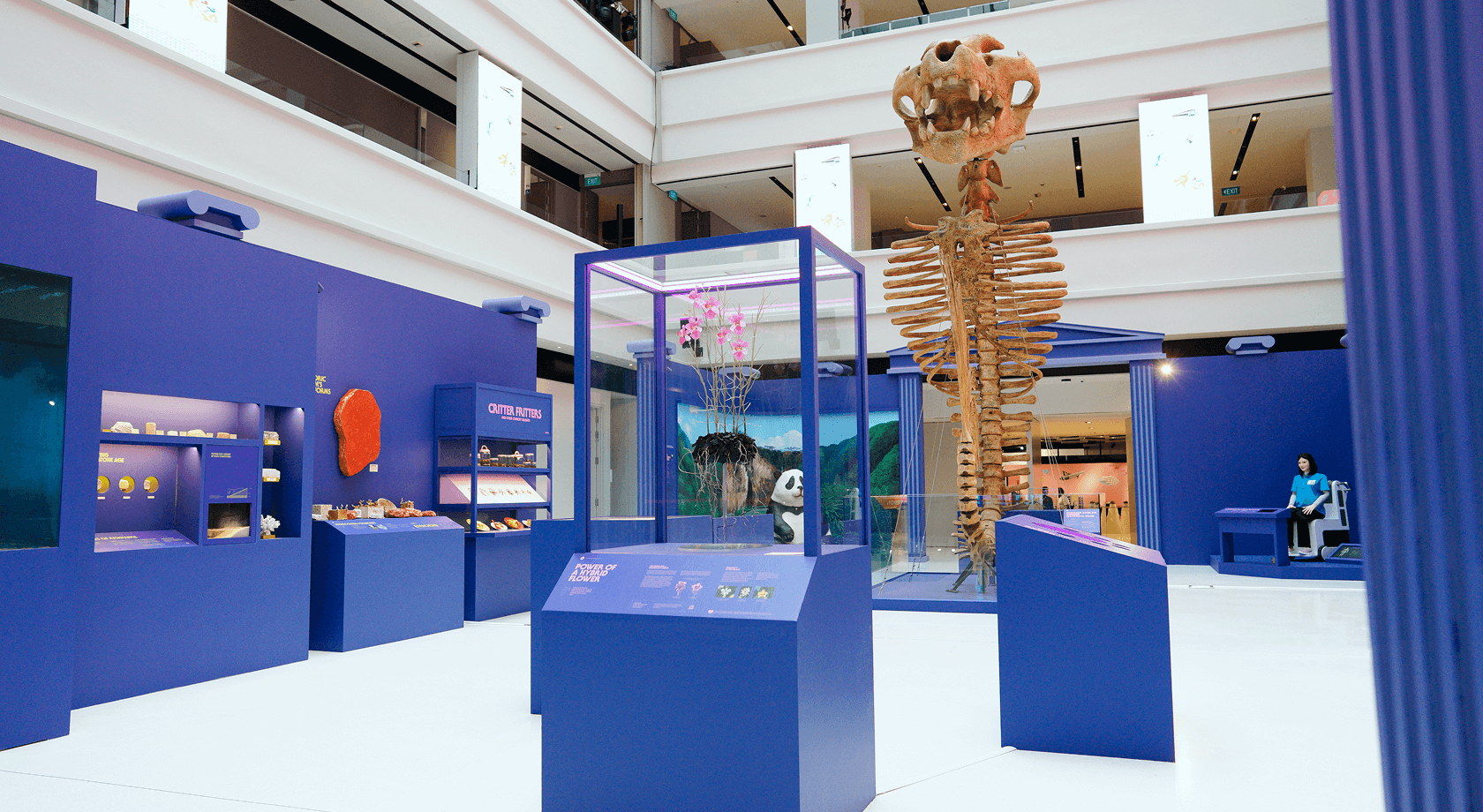
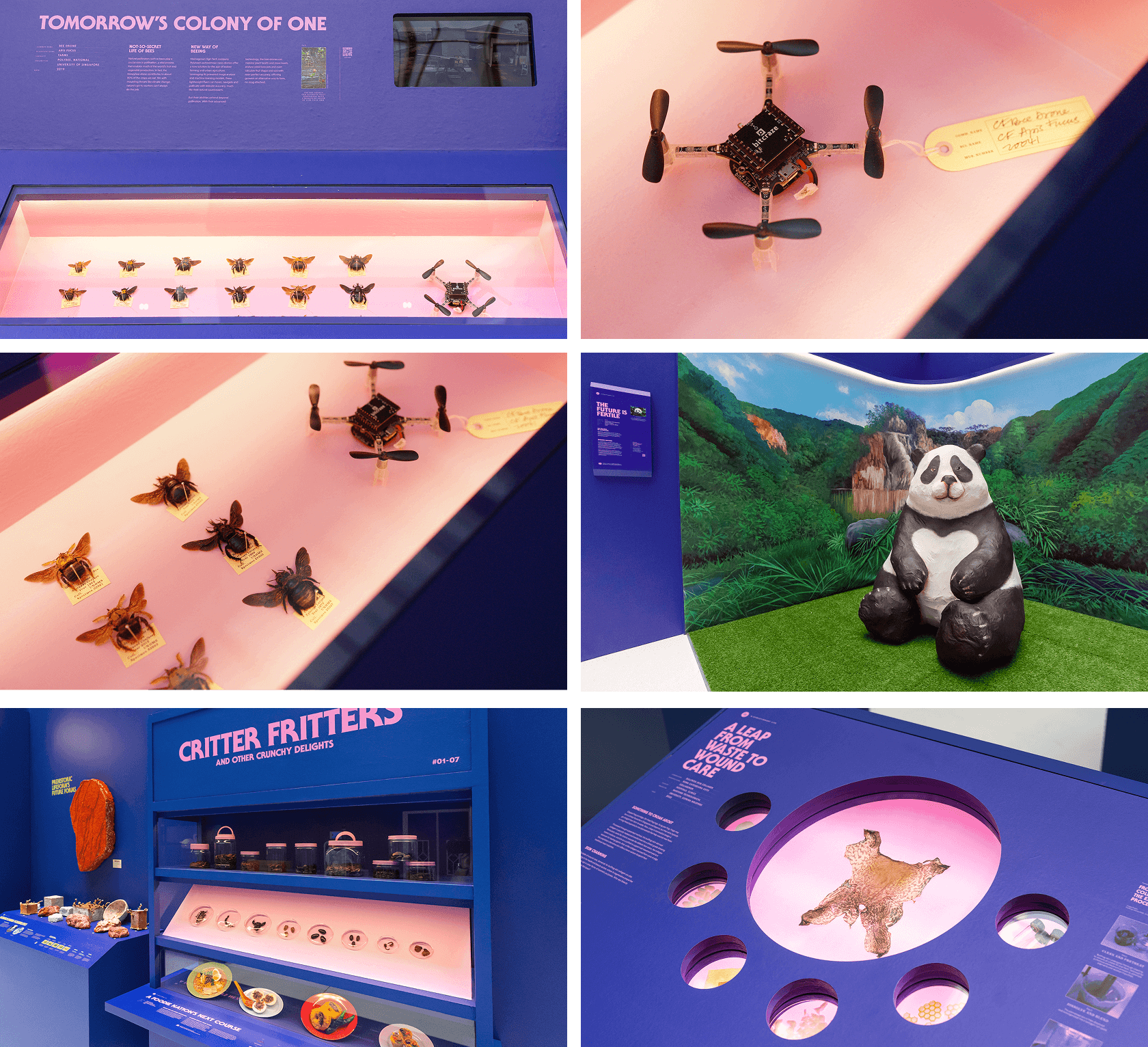
Like most natural history museums, ours too presents a collection of fauna and flora, taxidermy and geological specimens, habitat and landscape dioramas, and even a giant fossil — but with an unnatural twist. The 27 exhibits are curated along three themes, each exploring a different dimension of the Singapore story: R/Evolutionary Life, Growing Habitats, and The Resourceful Island.
R/Evolutionary Life
While natural organisms are subject to evolution, our unnatural fauna and flora exhibits are products of intentional intervention.
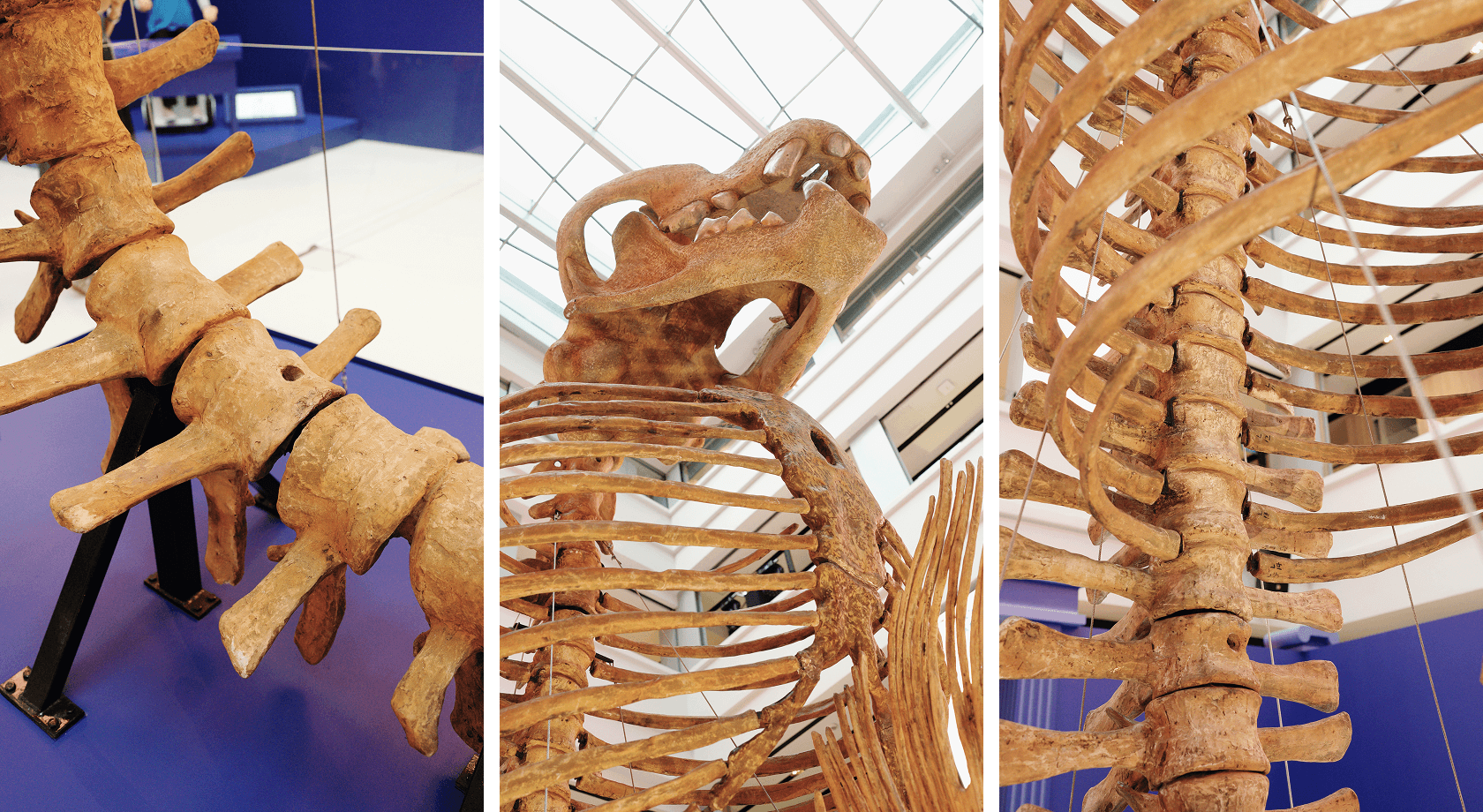
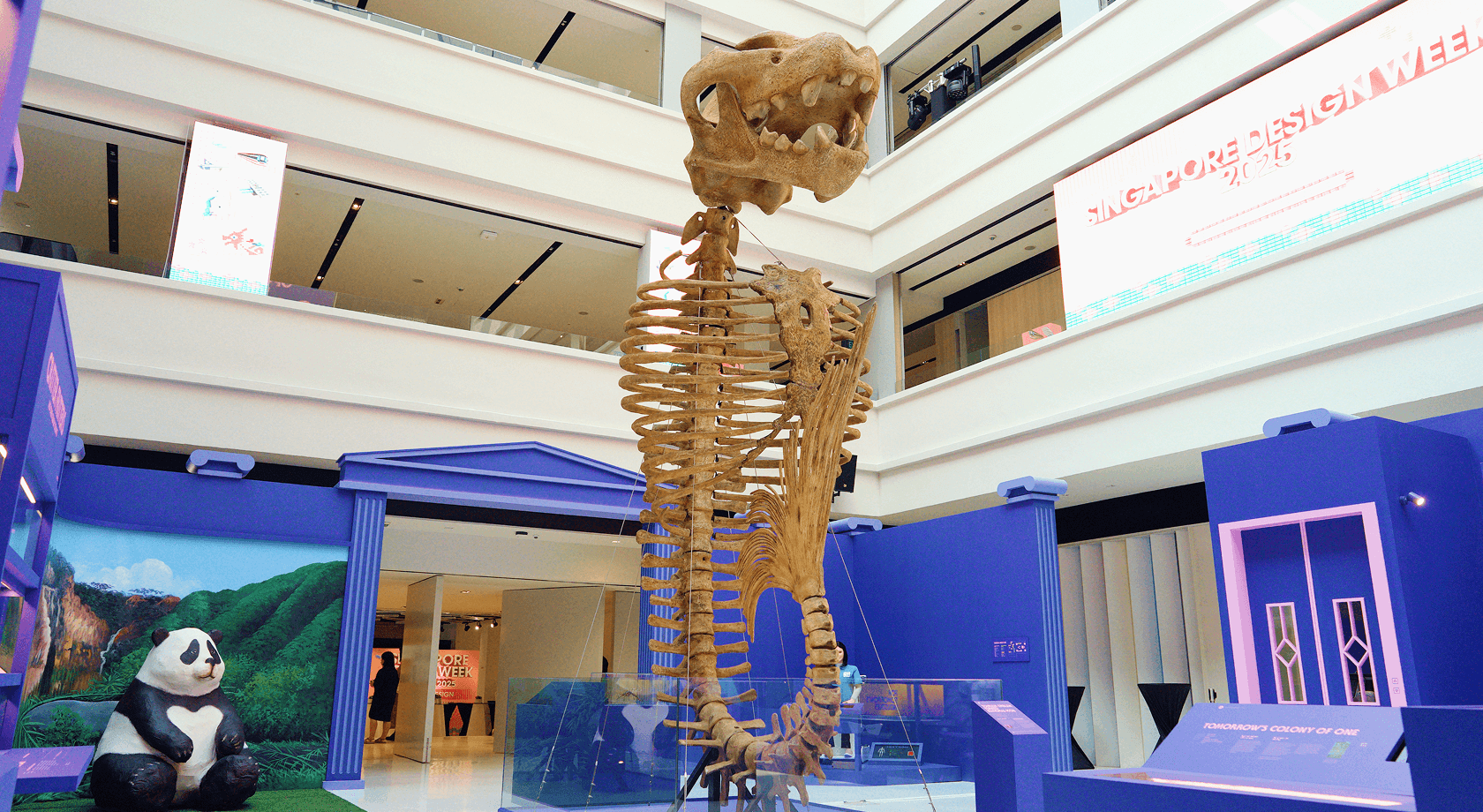
A half-lion half-fish creation originally designed to boost tourism, the Merlion is now a Singapore icon recognised globally. We reimagine it as a prehistoric fossil, a towering centrepiece that sparks curiosity and sets the stage for the rest of the exhibition.
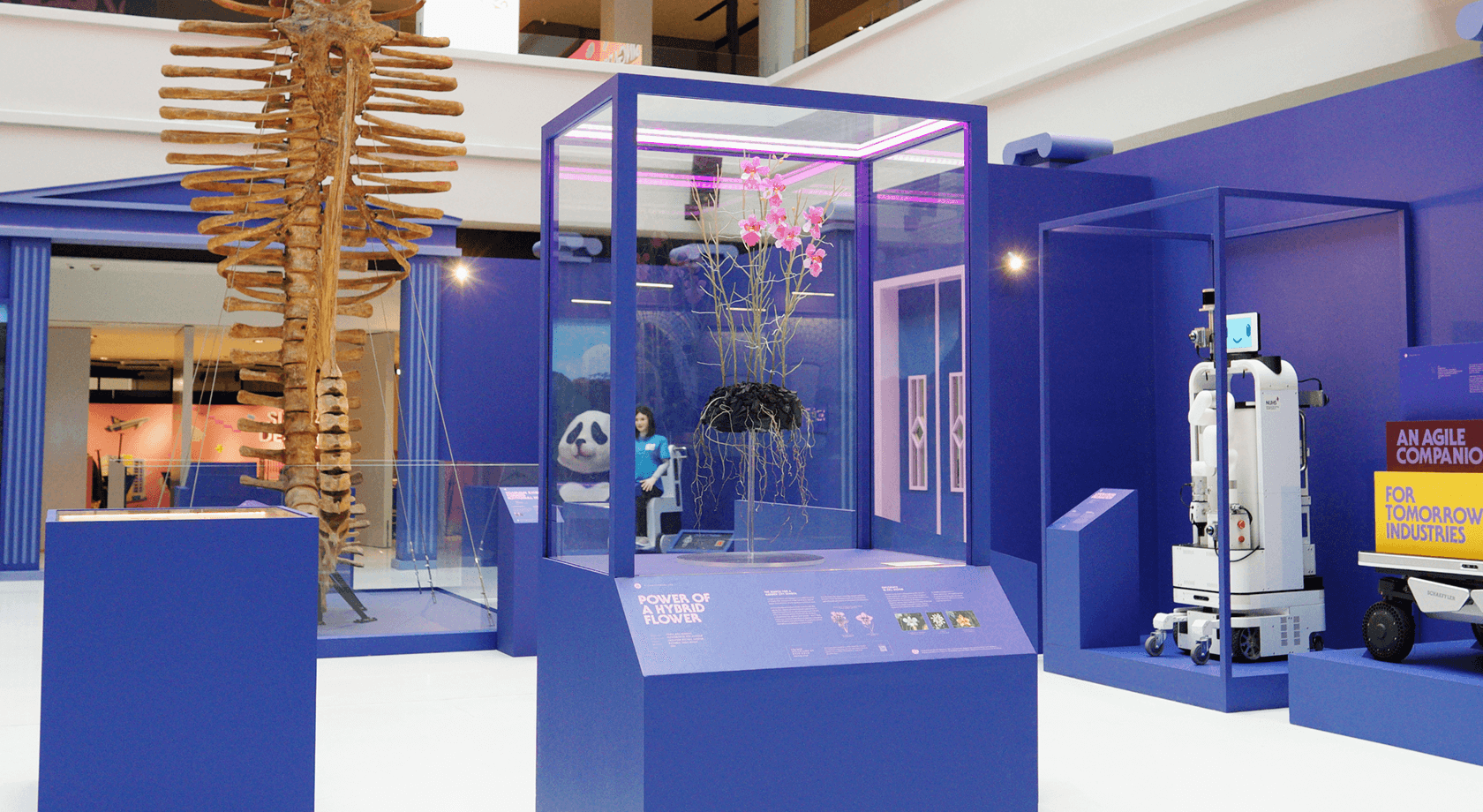
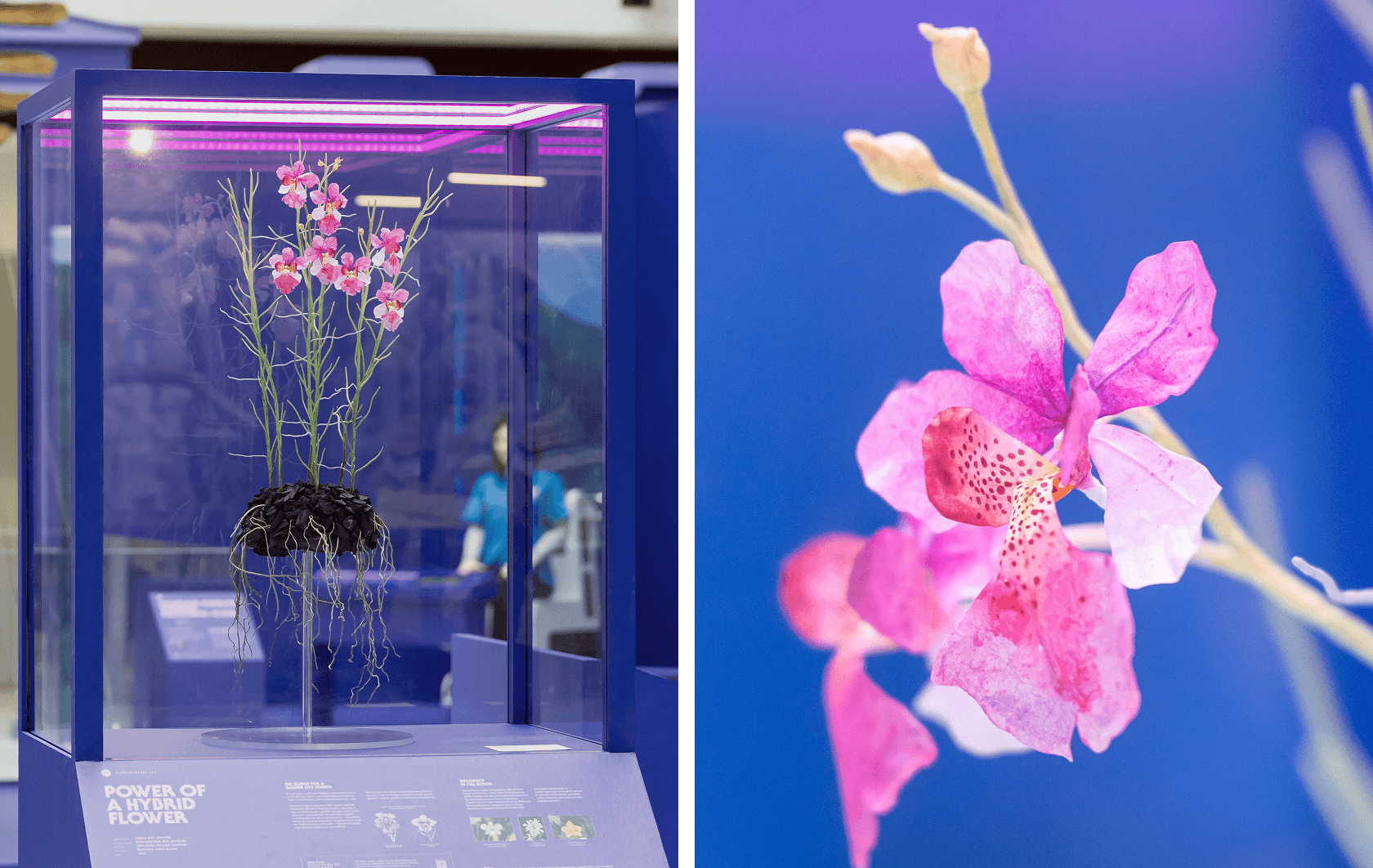
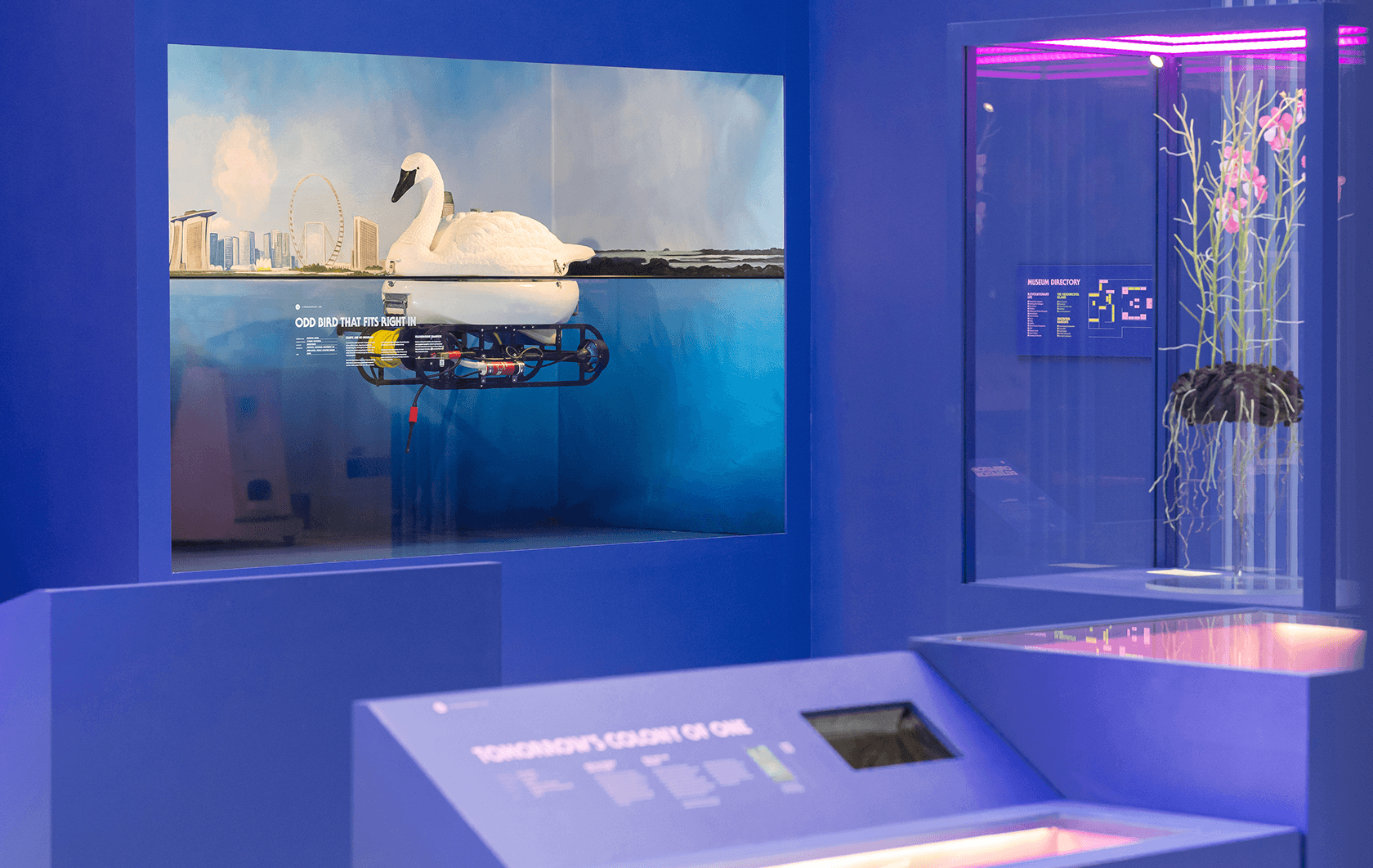
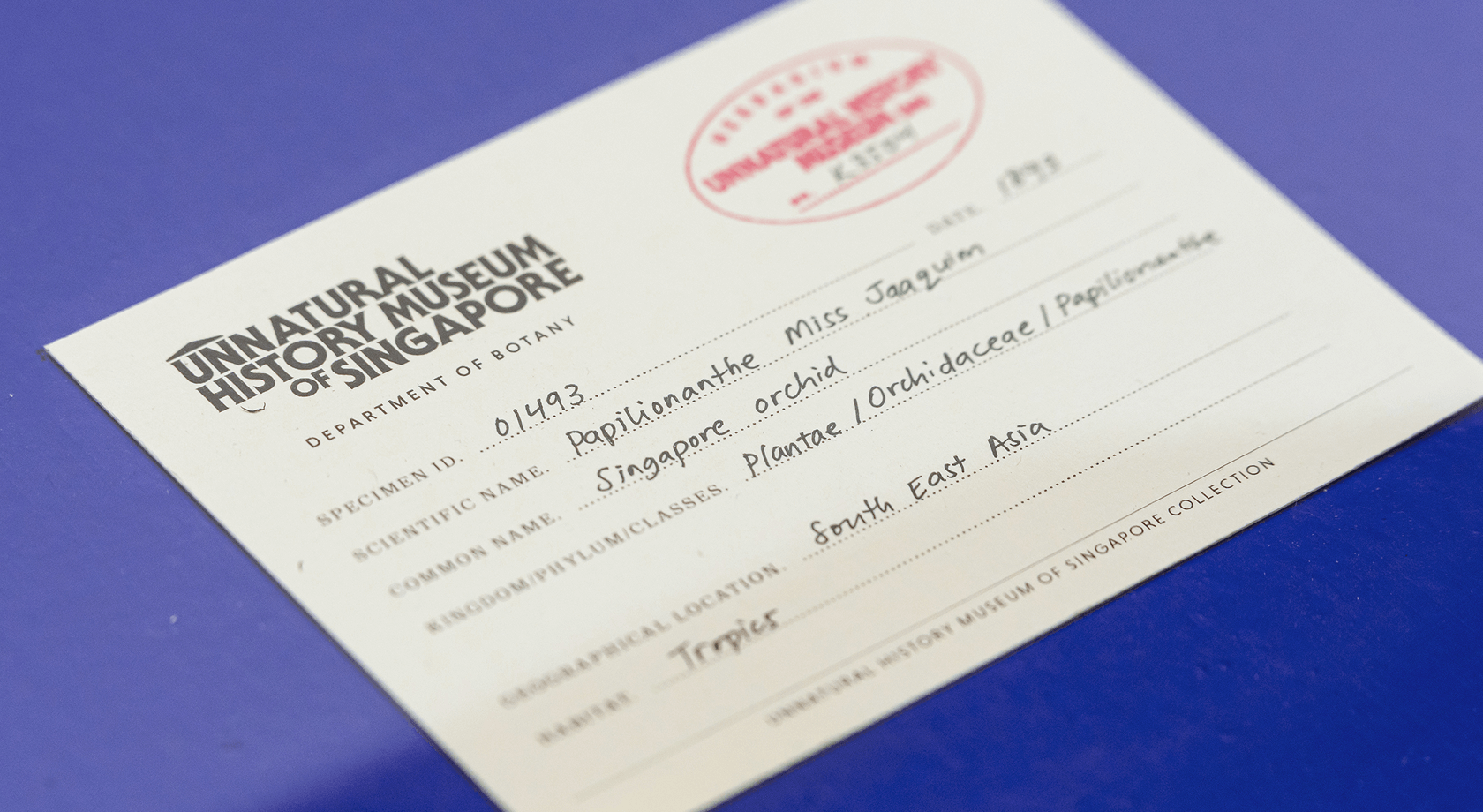
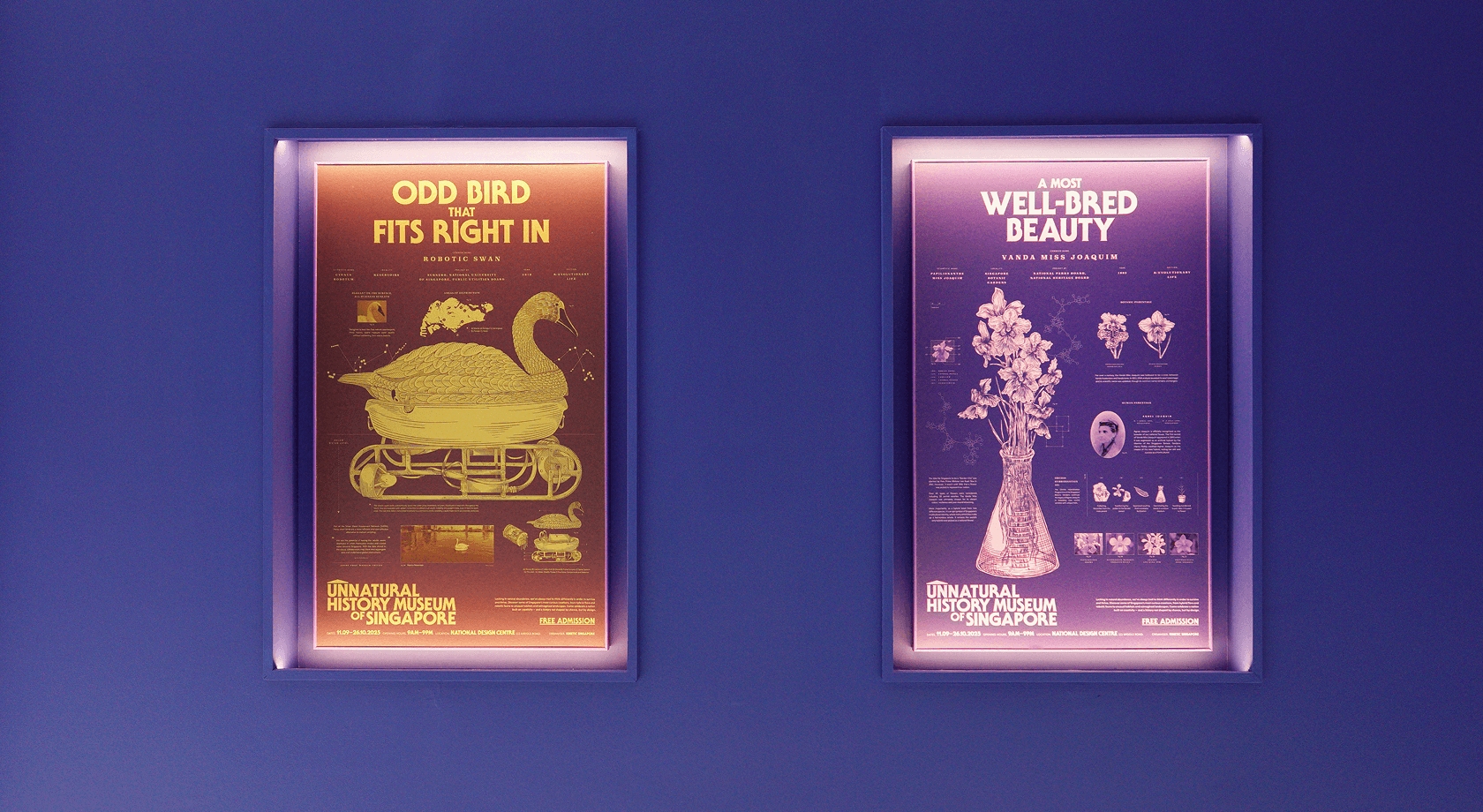
The national flower is just as unnatural, a man-made hybrid that symbolises Singapore’s multiculturalism. These orchids also serve as diplomatic envoys, with bespoke hybrids named in honour of visiting dignitaries. In place of actual specimens, blooms crafted from paper further accentuate the artificiality.
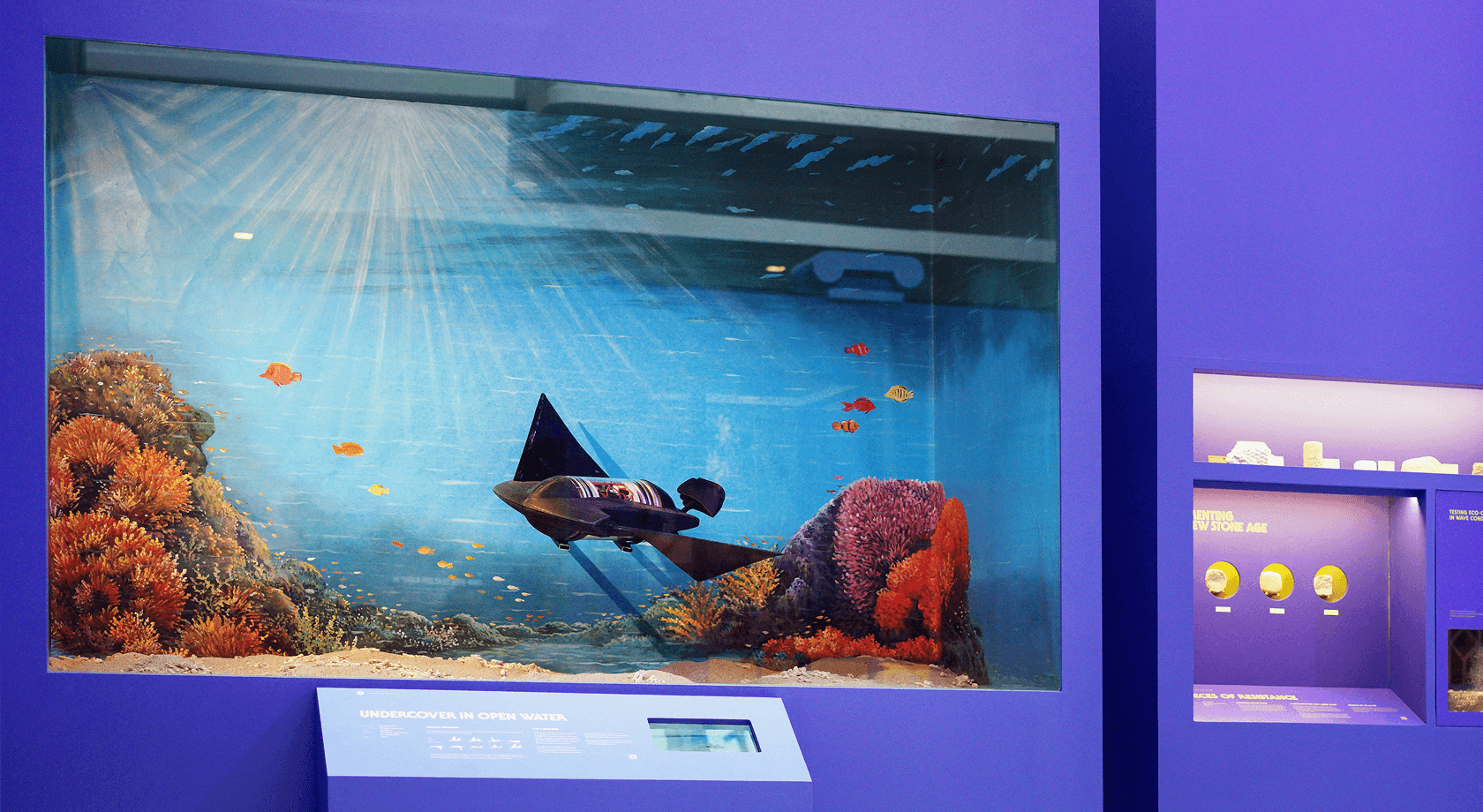
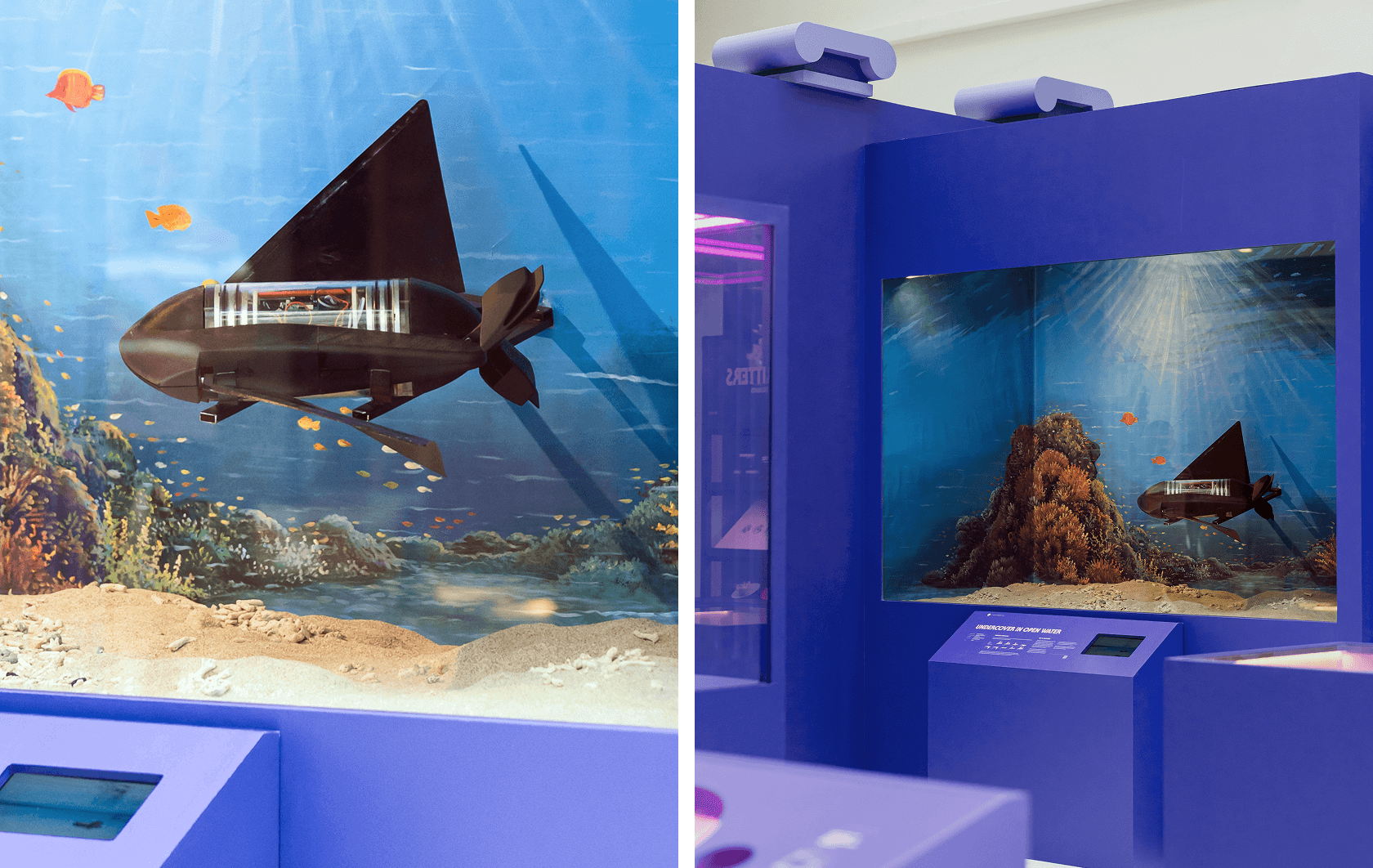
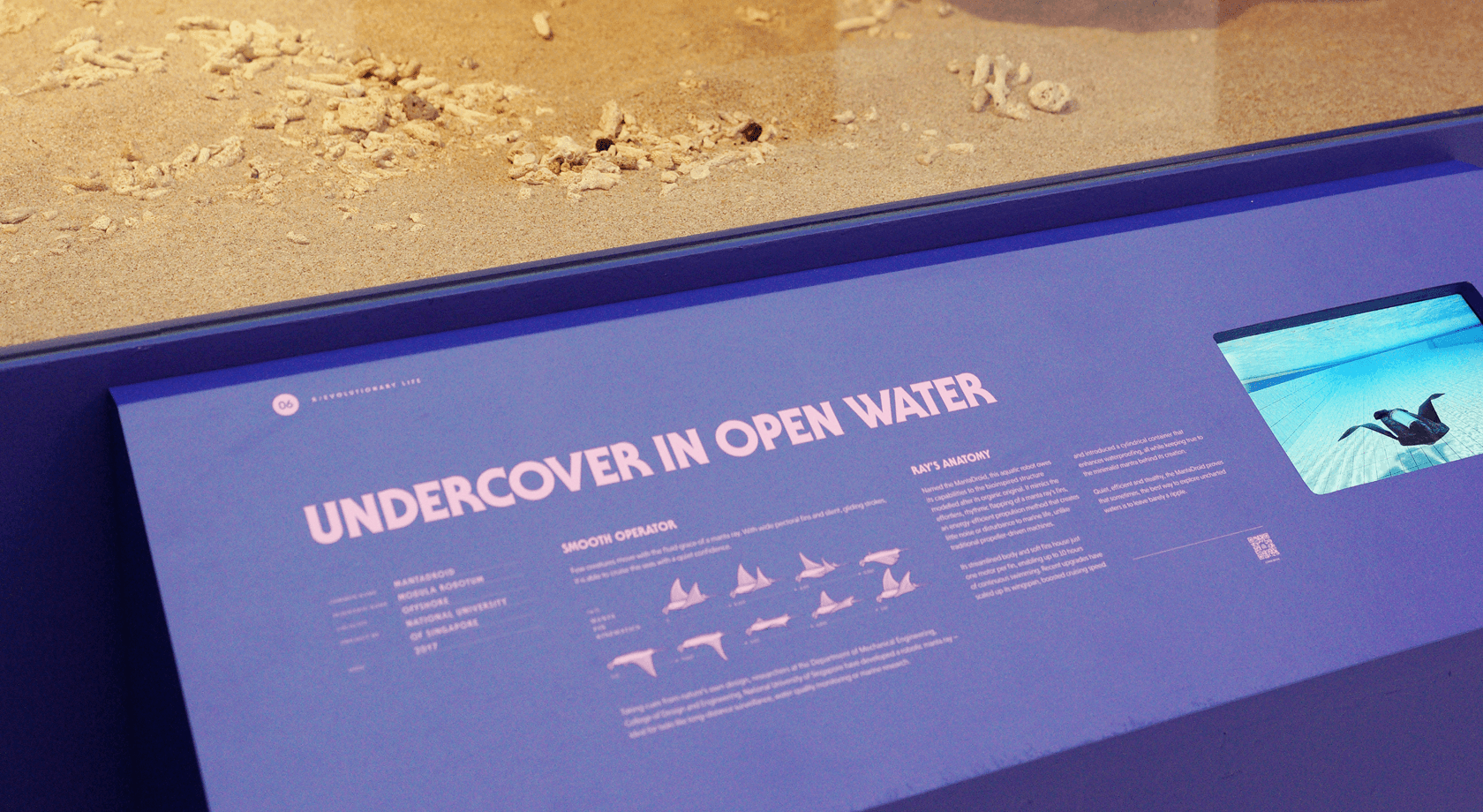
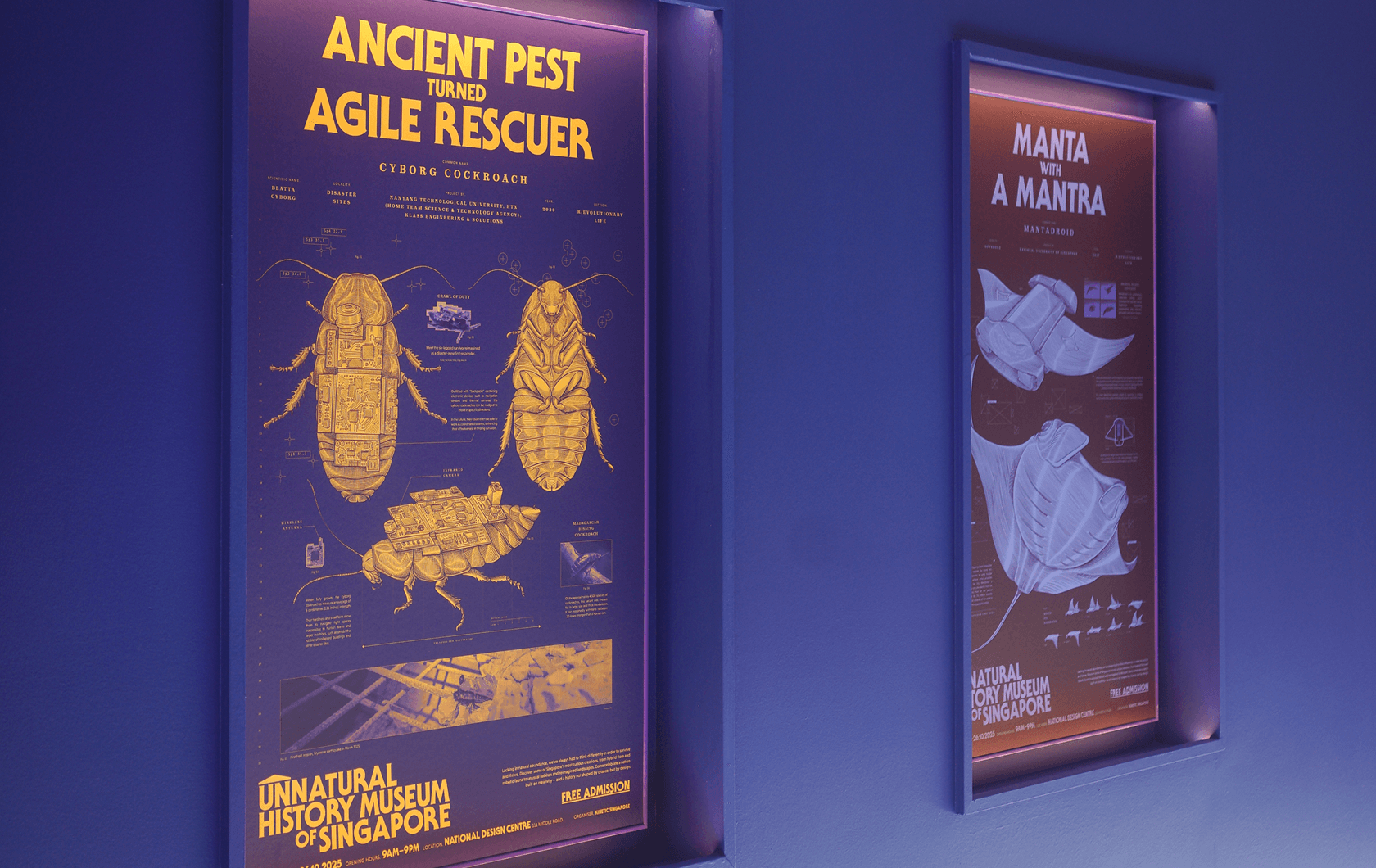
Some of the mantas found offshore are in fact manta droids that patrol Singapore’s waters, their ray-like movements minimising disruption to marine life. Set amidst a naturalistic diorama, this fish is made to seem even more out of water.
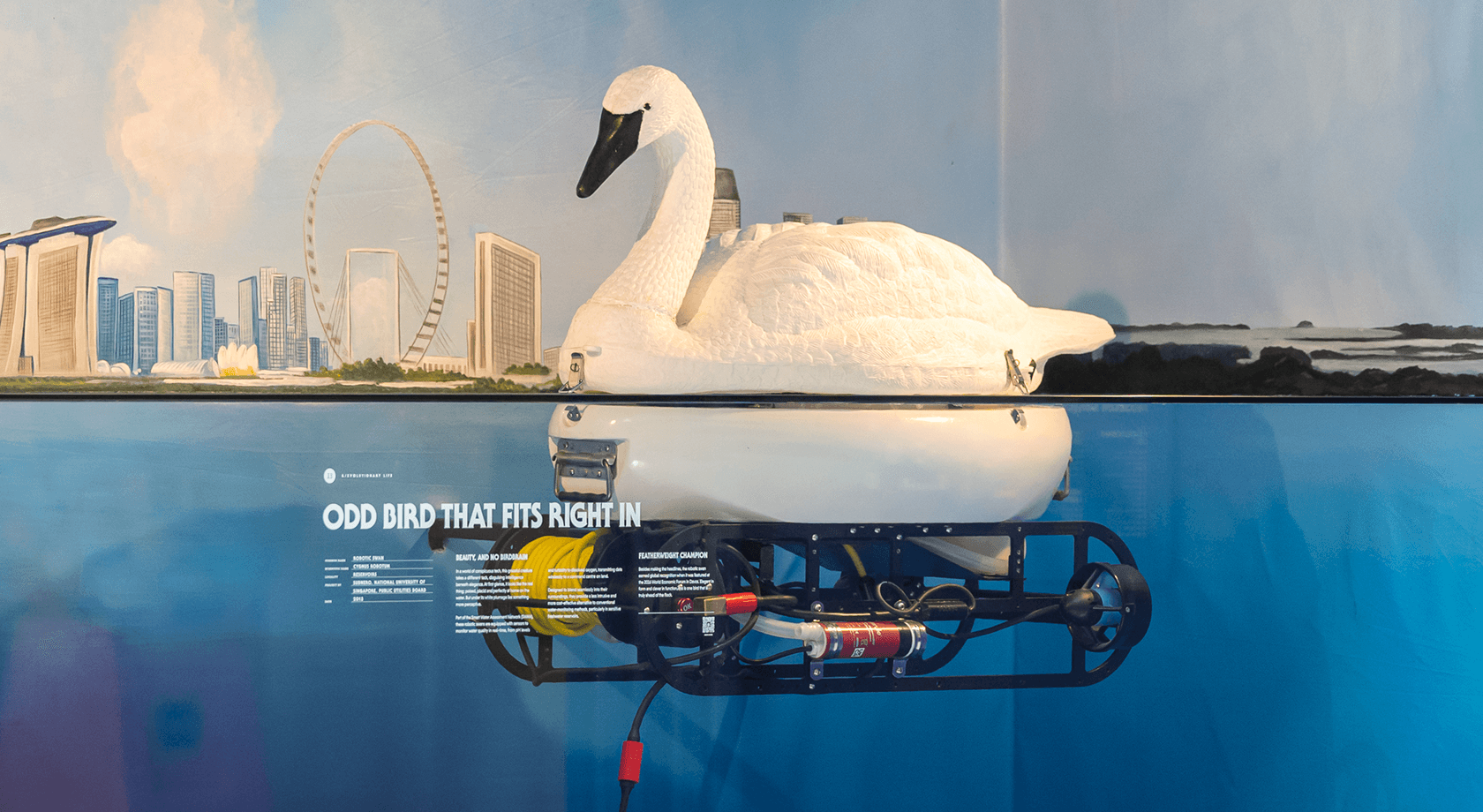
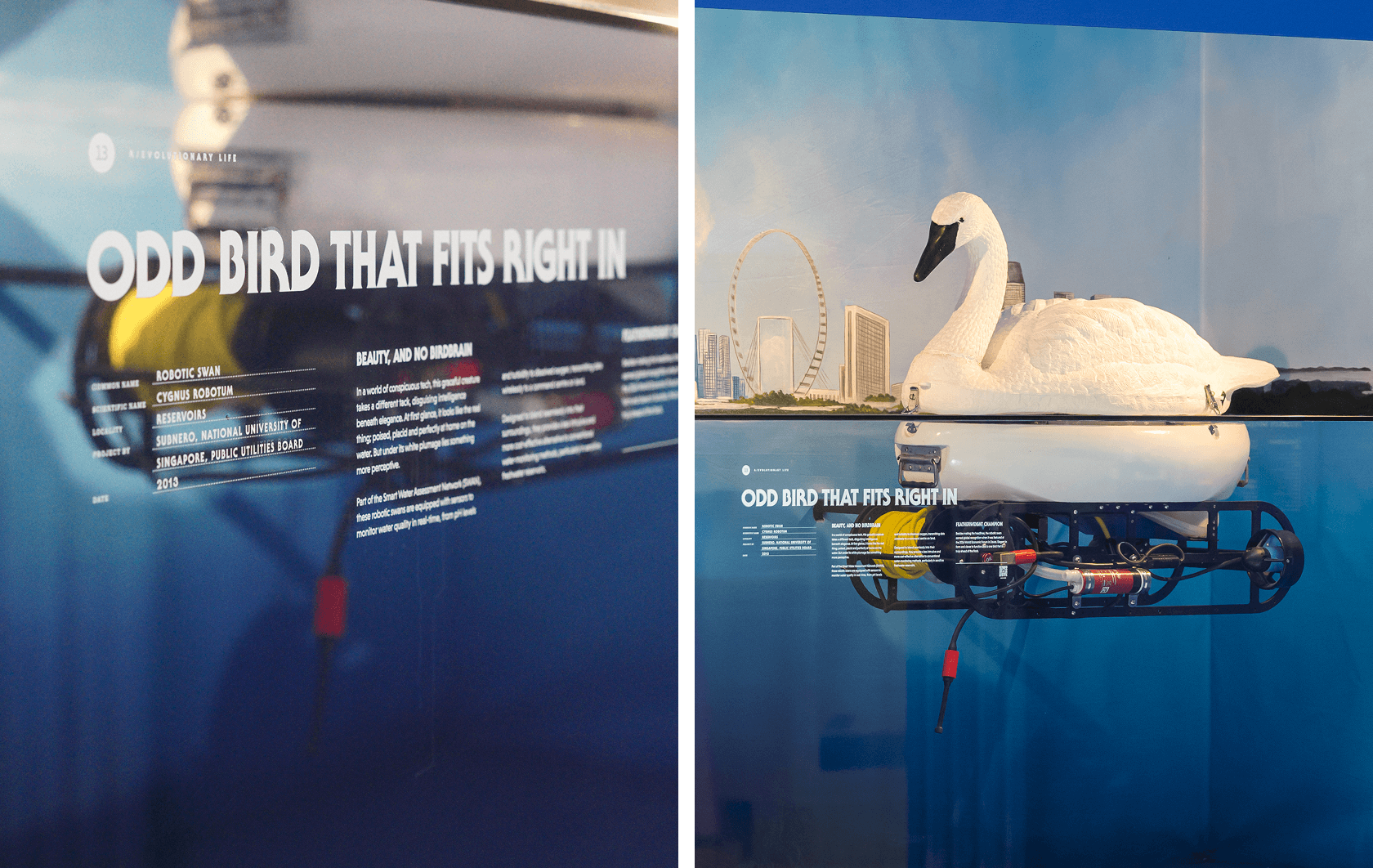
Designed to look like their natural counterparts, robotic swans deployed at reservoirs measure water quality without detracting from scenic beauty.
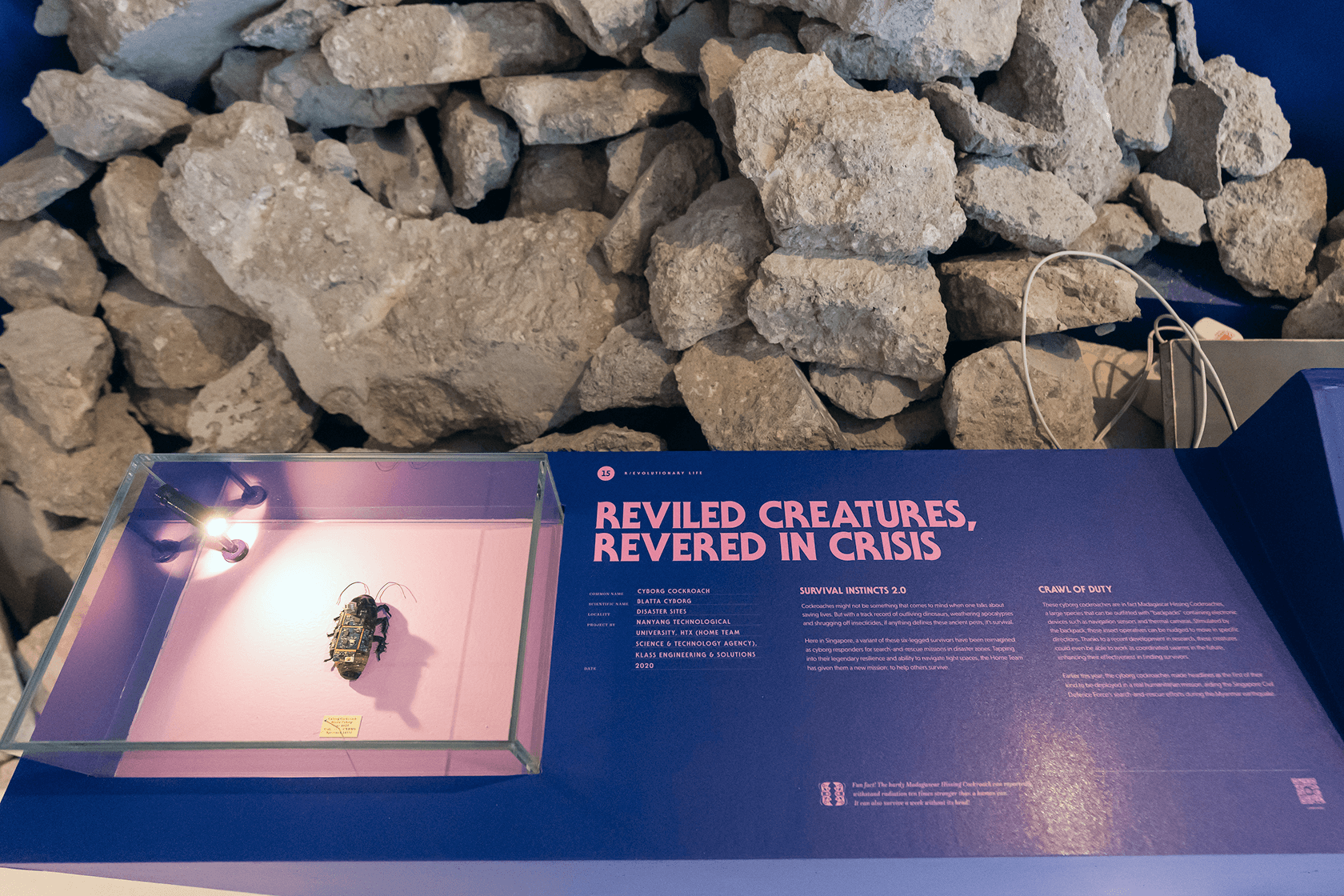
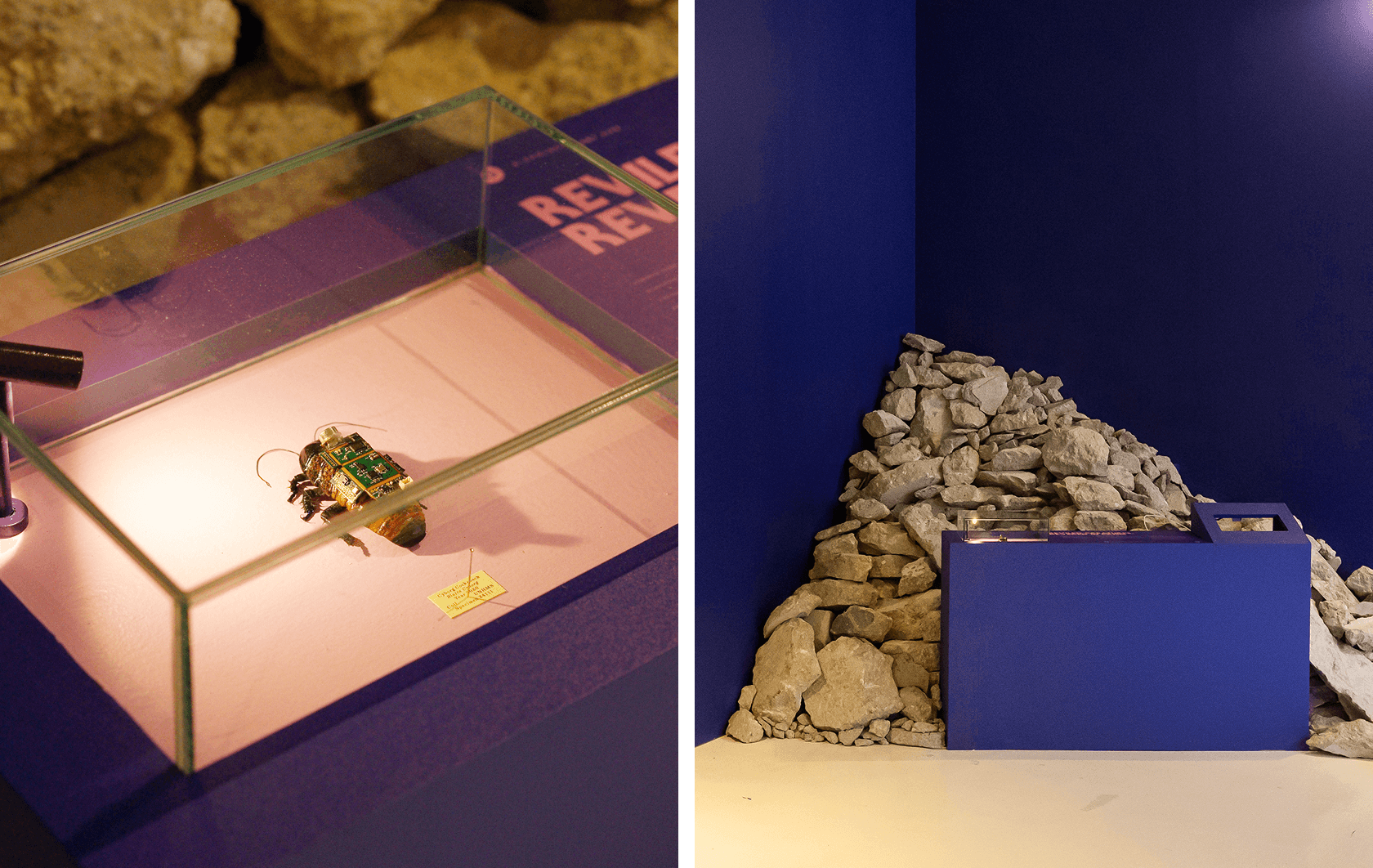
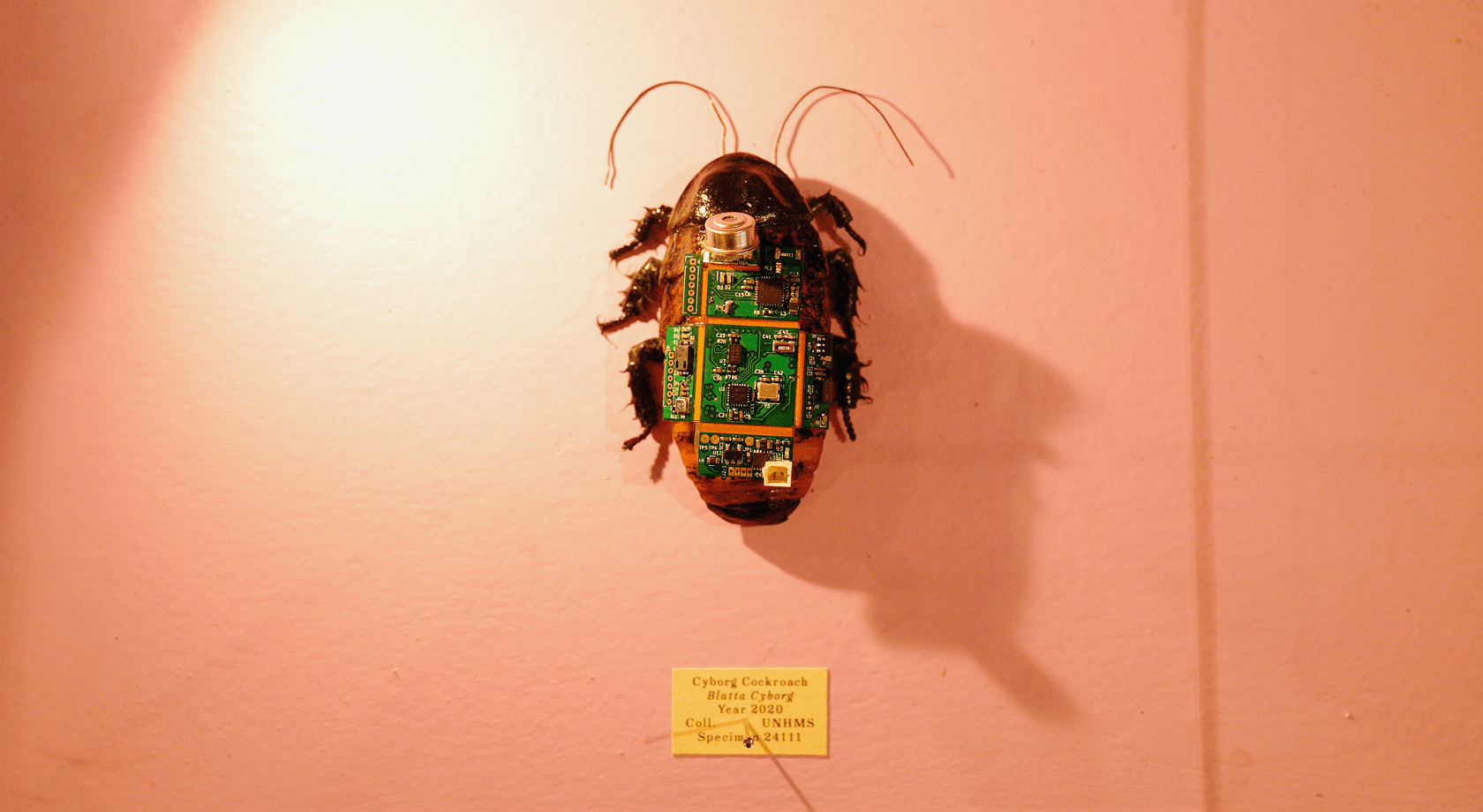
In Singapore, even pests are made useful. Equipped with sensors and cameras, cyborg cockroaches aid in search-and-rescue in areas inaccessible to human responders.
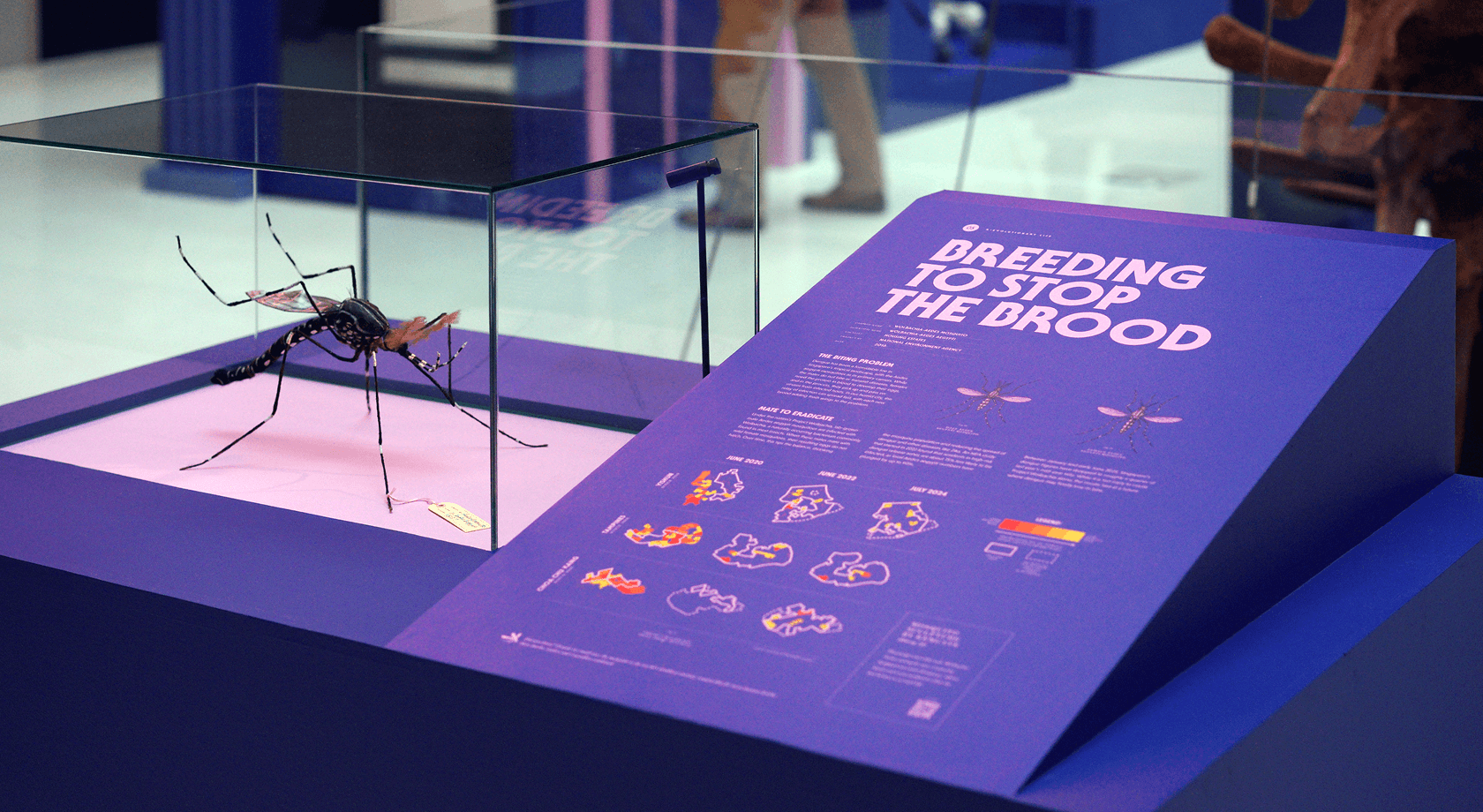
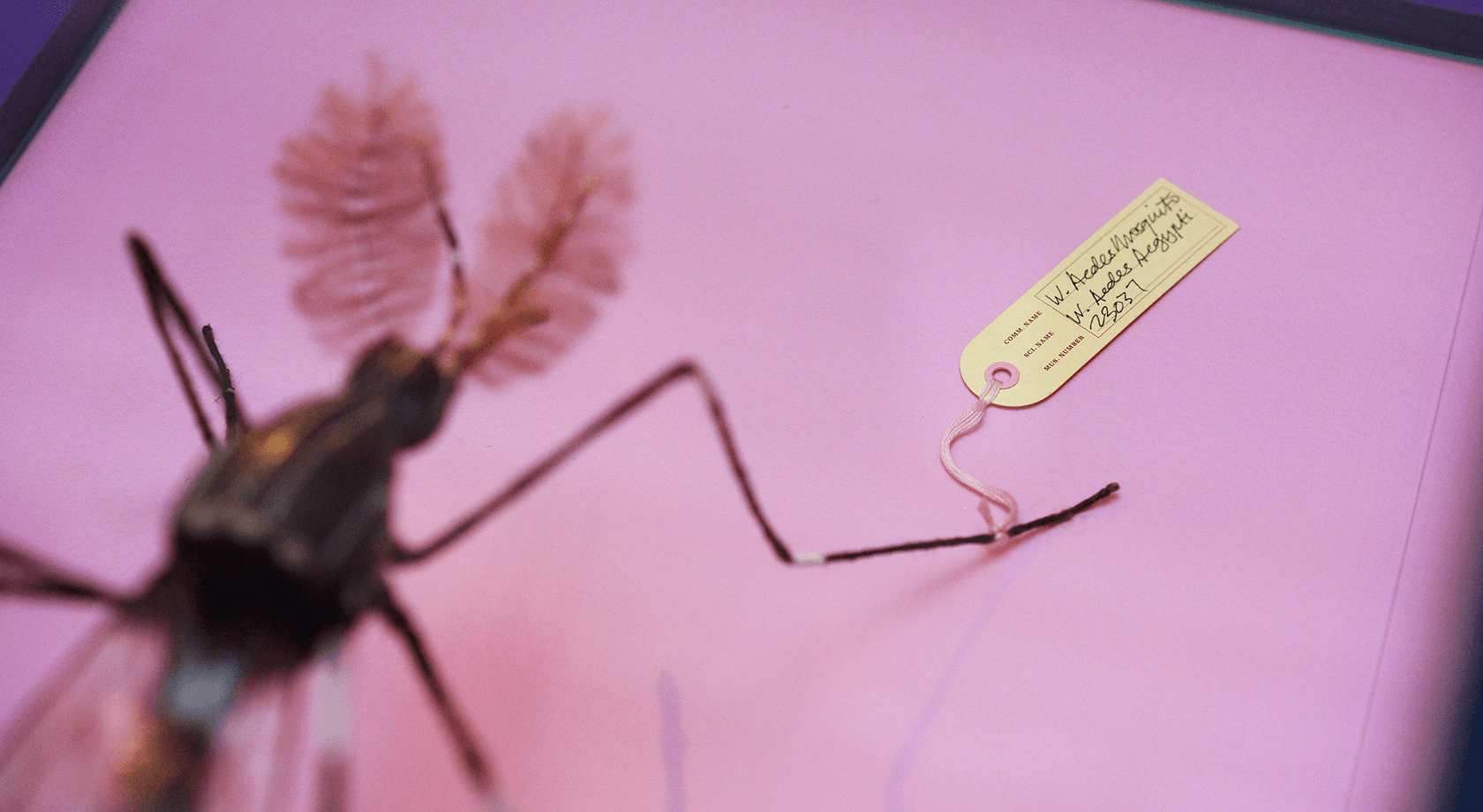
The case for unnatural selection? Male Aedes mosquitoes infected with Wolbachia in the lab are released in dengue hotspots to mate, producing non-fertile eggs and shrinking the Aedes population over time. This tiny disruptor with an outsized impact is fittingly represented by our larger-than-life taxidermic model.
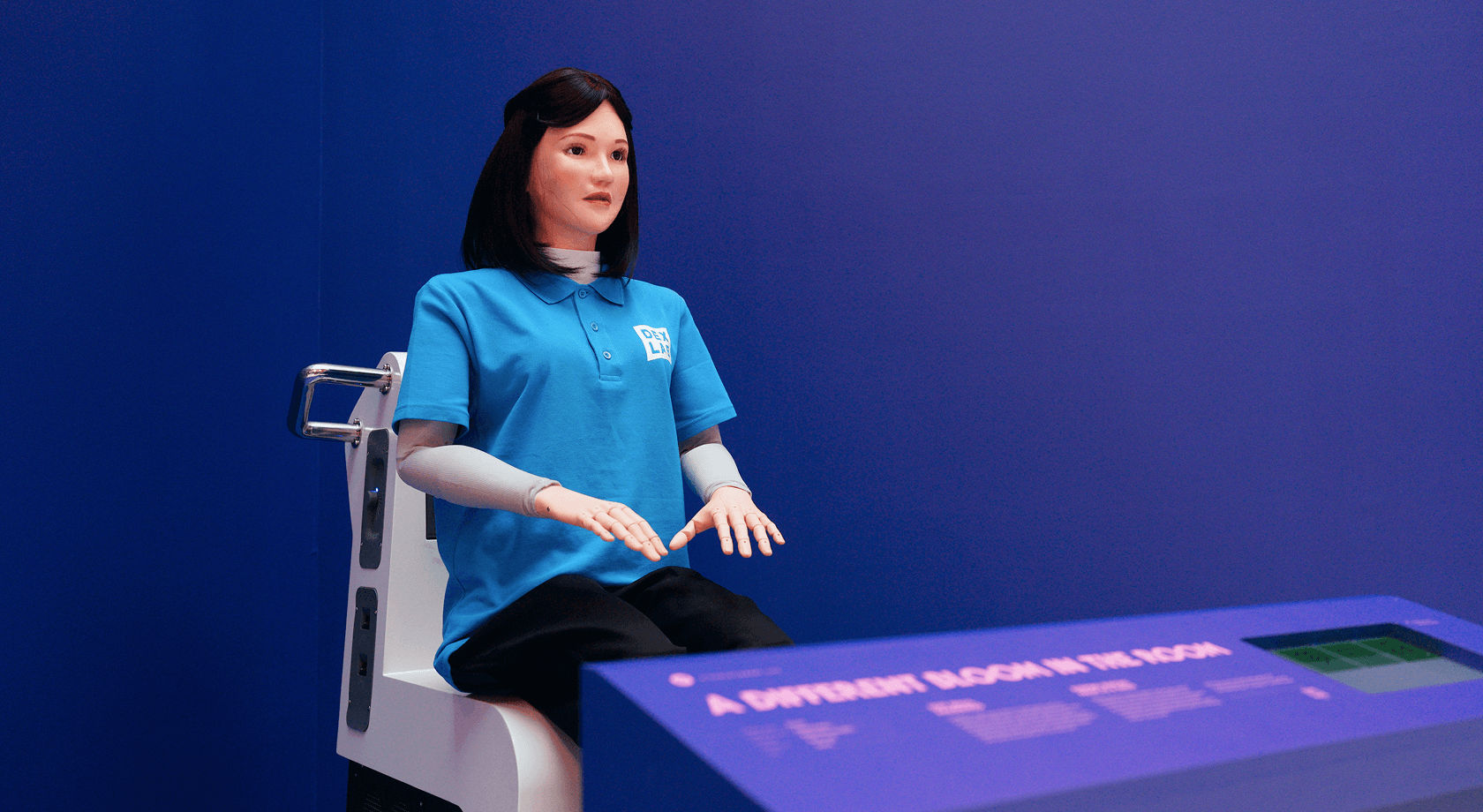
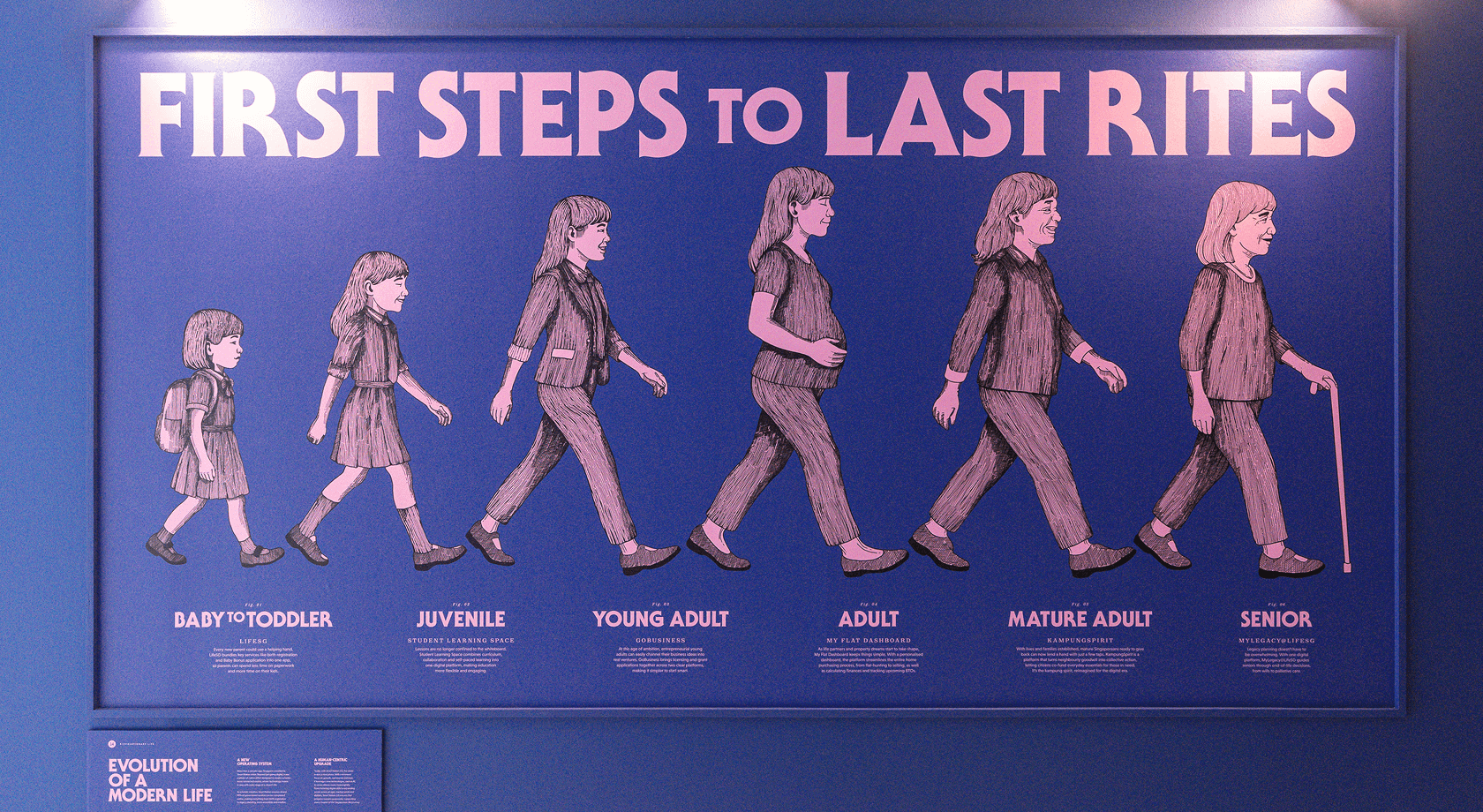
Faced with a rapidly ageing society and declining birth rates, a new species of humans has been conceived to lend a hand to caregivers and healthcare workers in looking after the elderly.
Growing Habitats
Singapore is one of the most land-scarce countries, yet such constraints have not stopped it from growing into one of the most liveable.
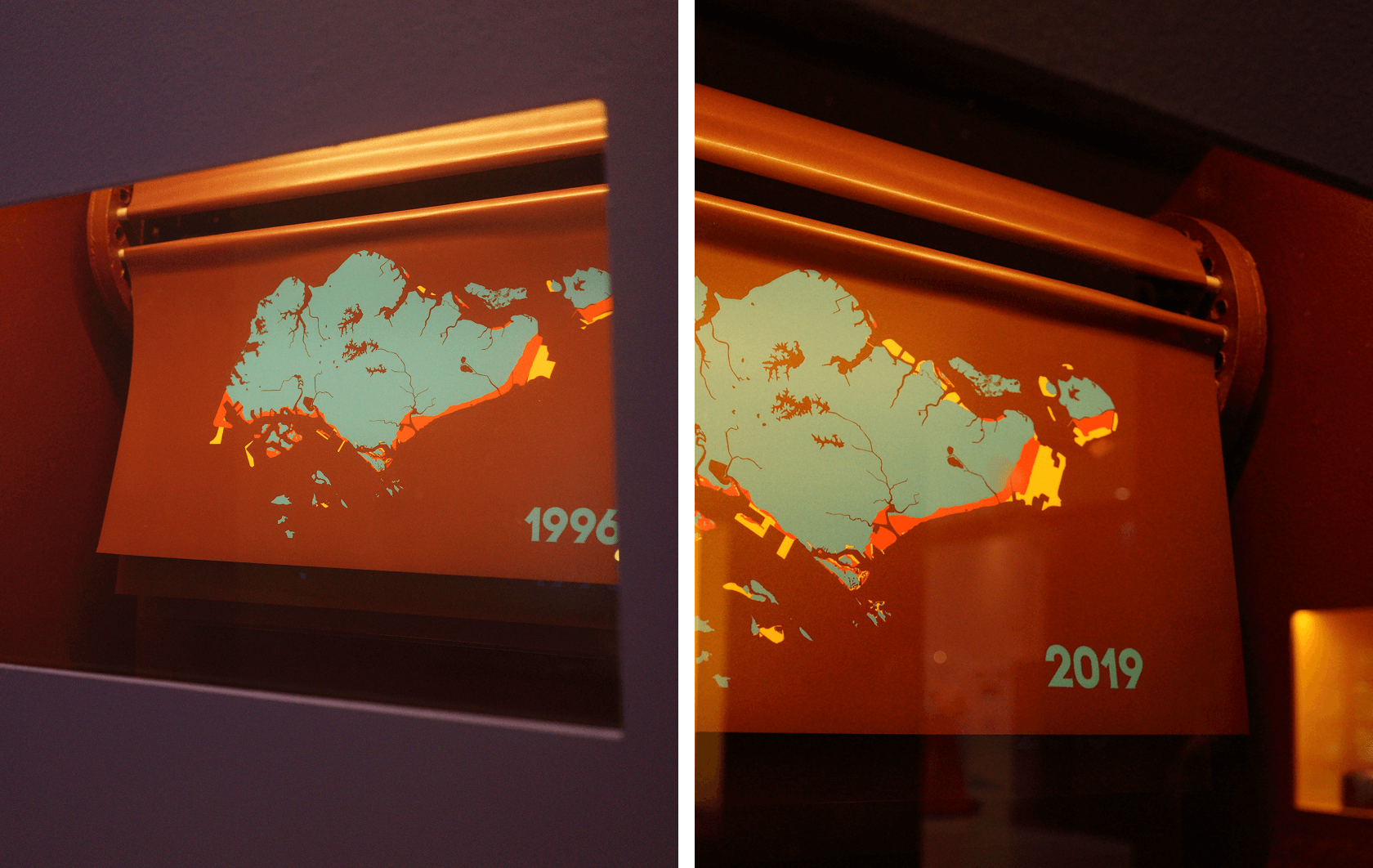
While land reclamation is not uncommon, Singapore’s scale is unnatural, earning it the Guinness record for fastest growing country. Our flipchart lets visitors trace its expansion through the years to see how it has grown by a full quarter.
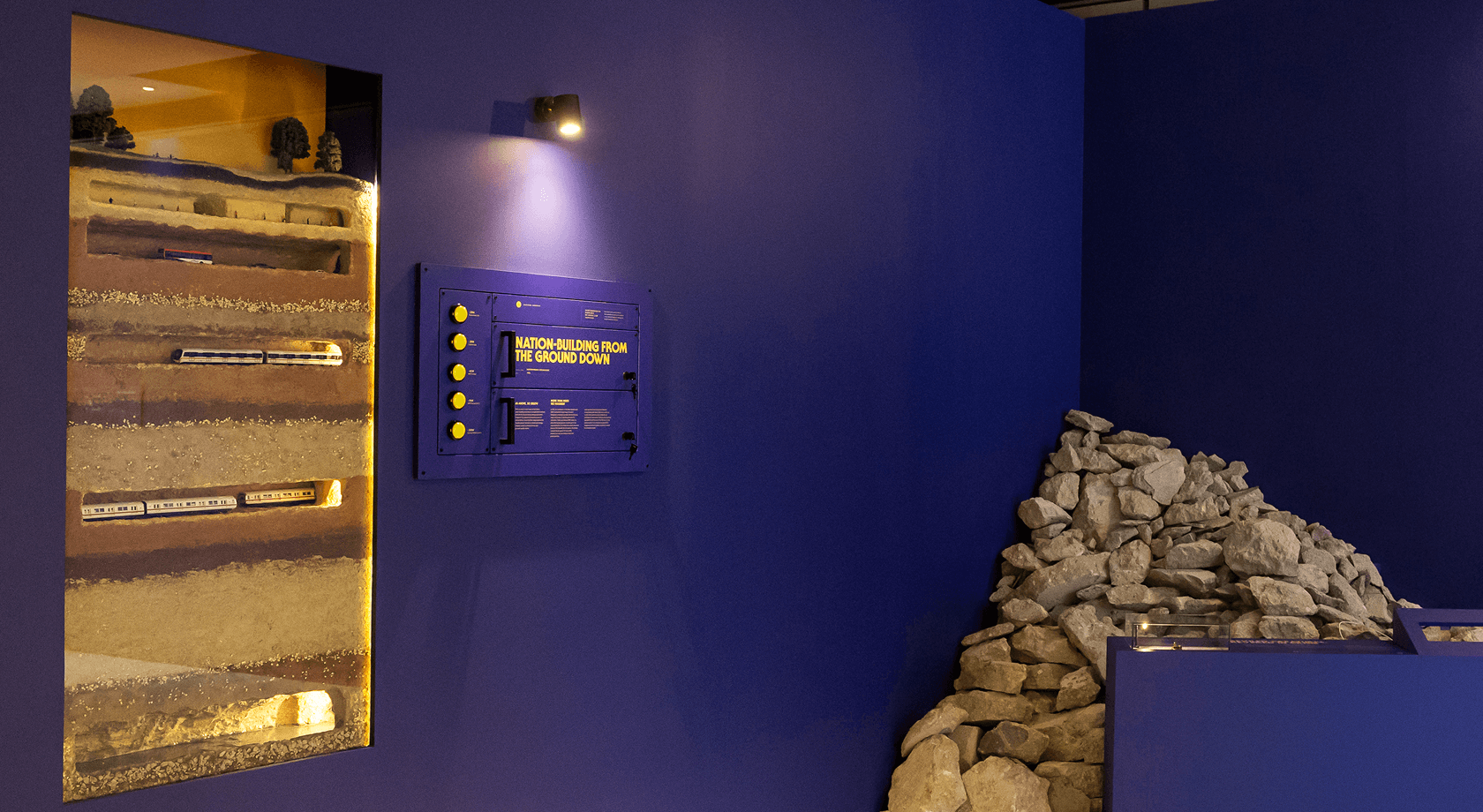
Land beneath the feet is put to use too, with subterranean space carved out for transport, utilities and storage as deep as 150 metres underground. To reveal this hidden world, we employ a cross-section diorama that presents the urban infrastructure like geological strata.
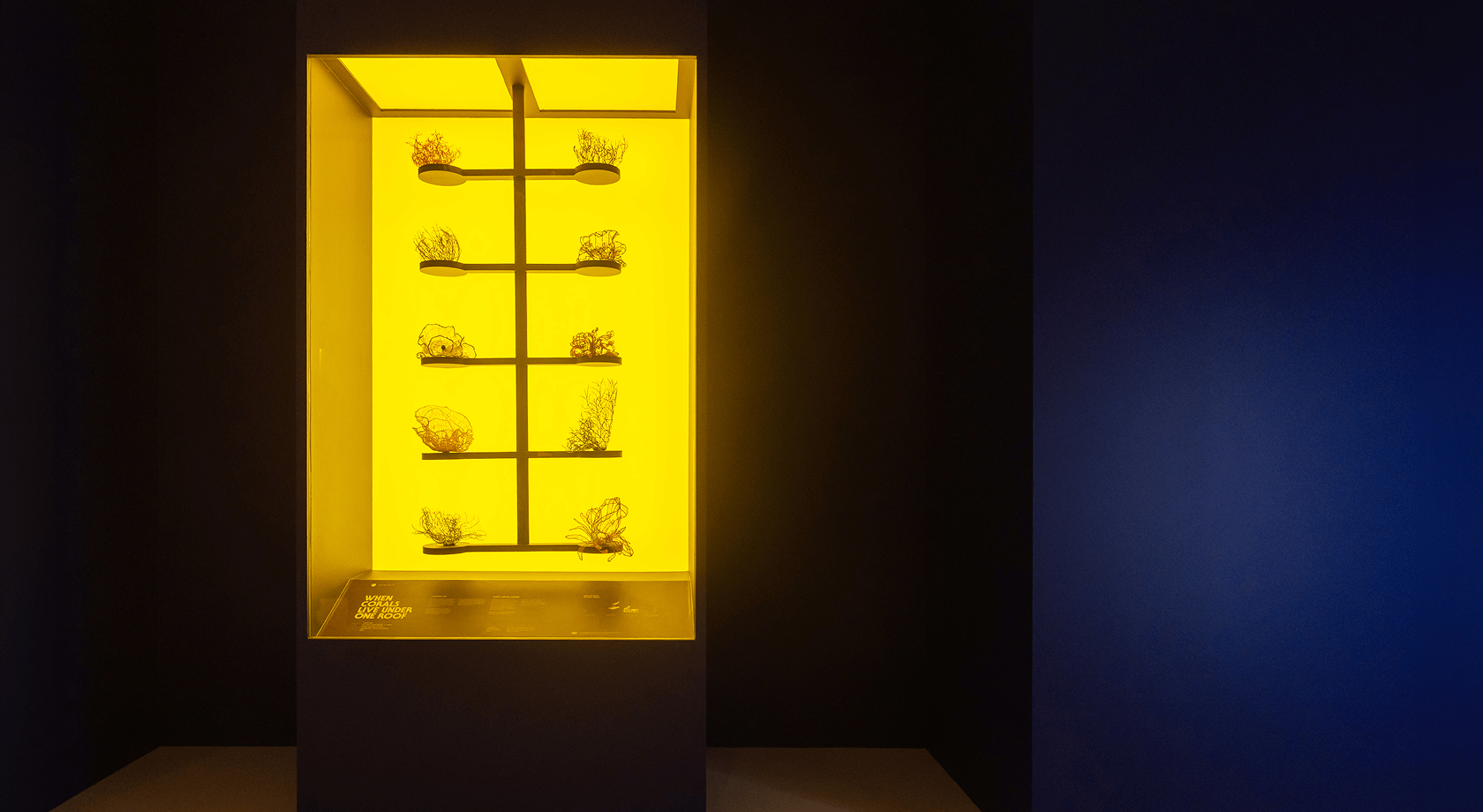
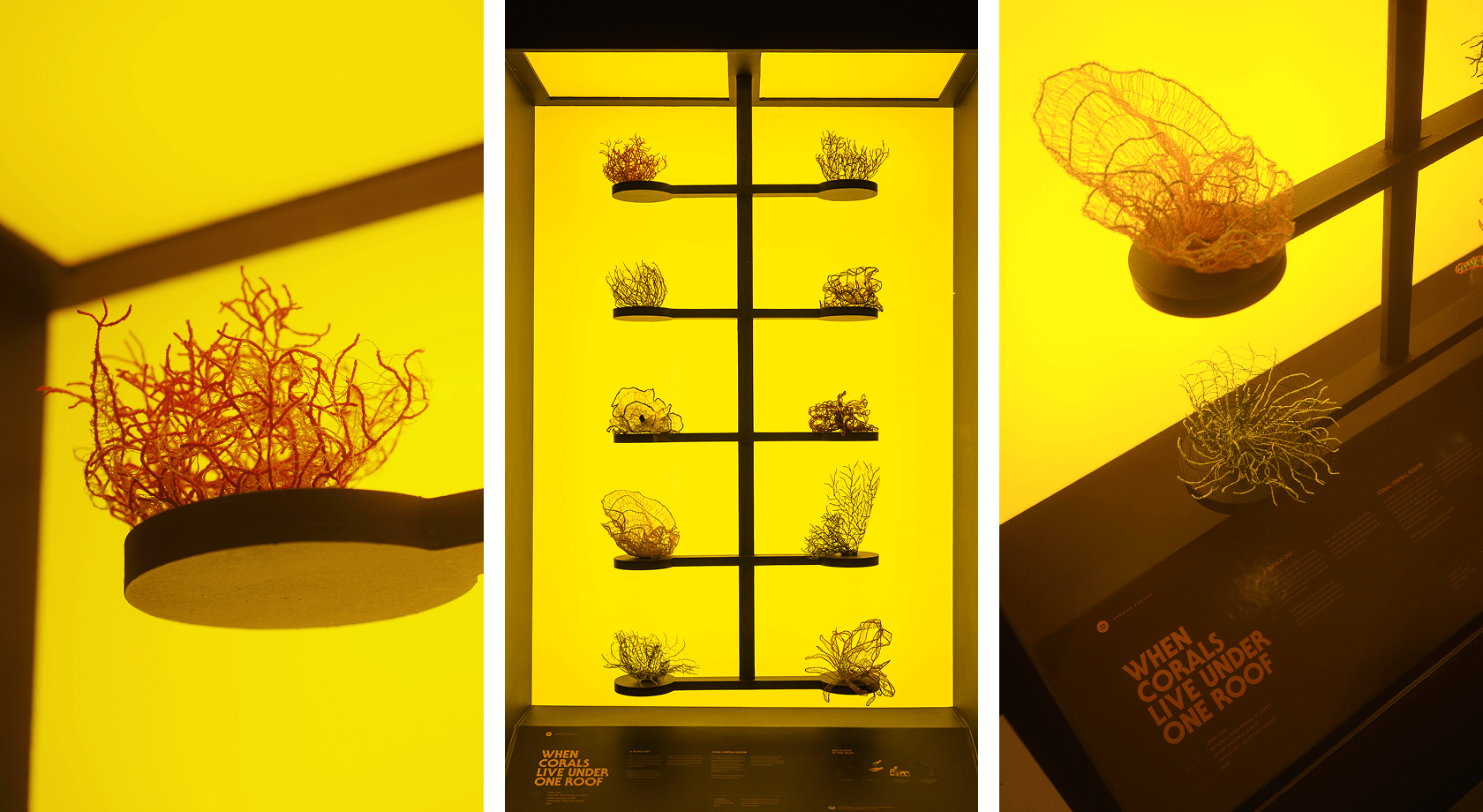
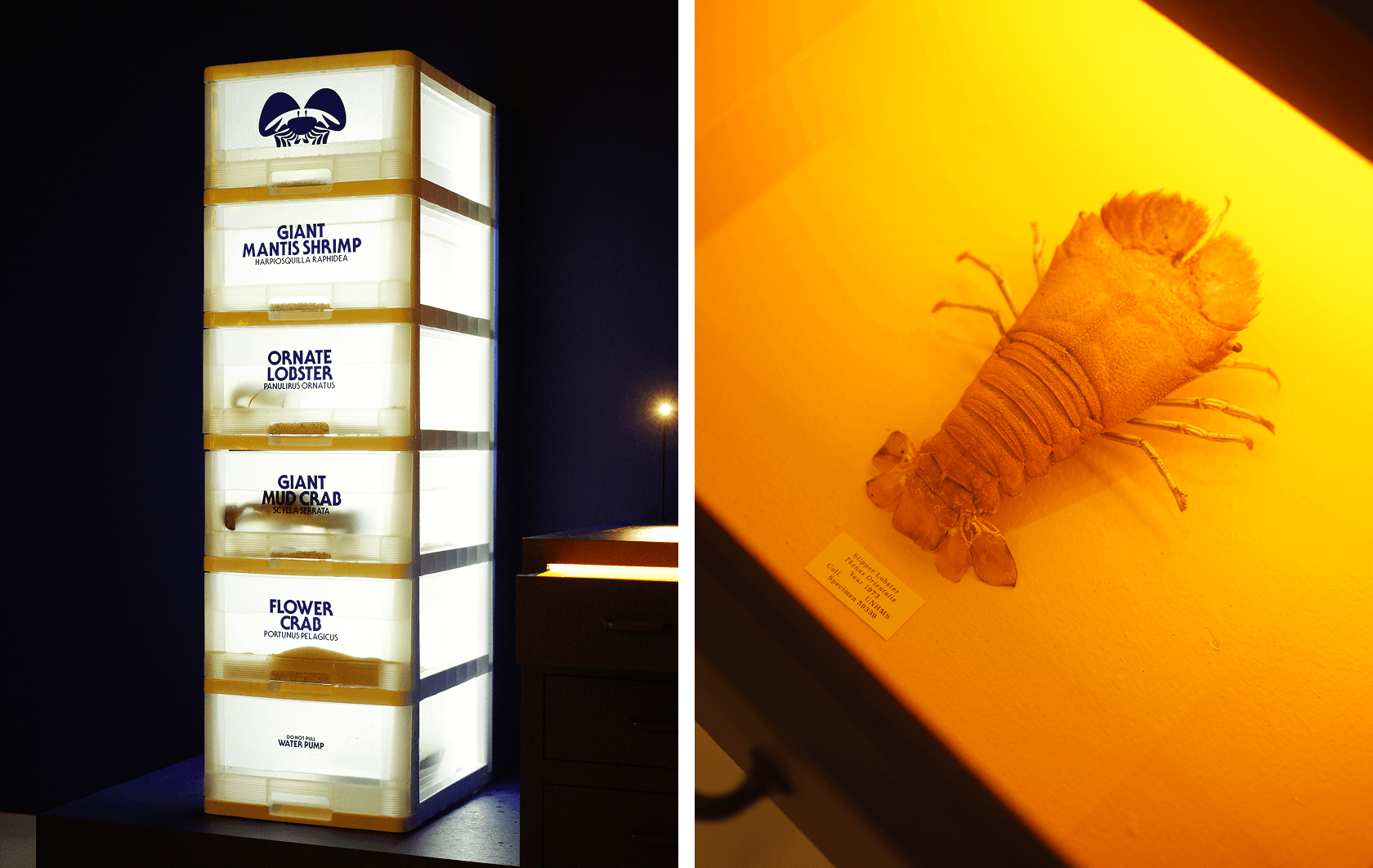
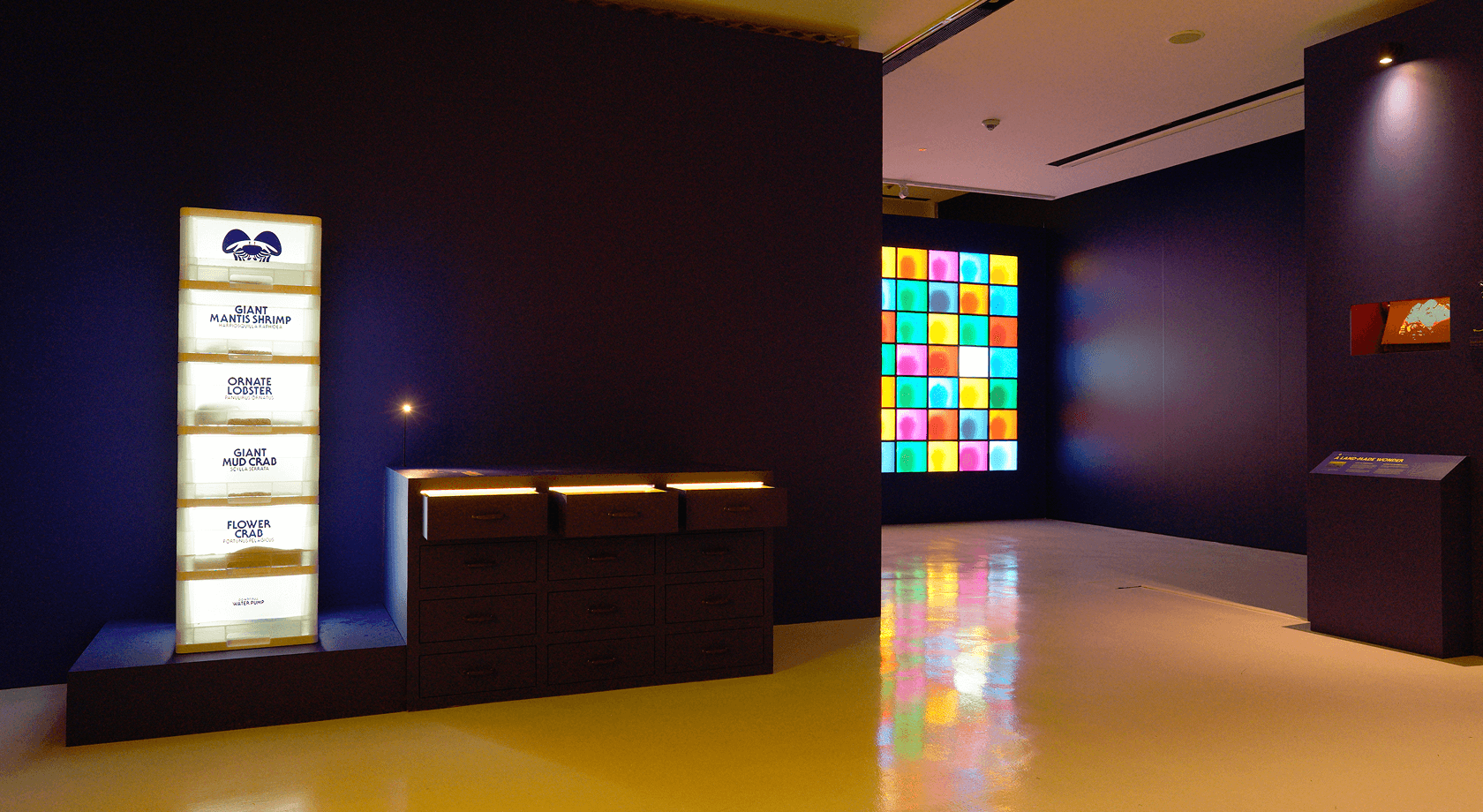
High-rise living is no longer just for humans! Coral HDBs cultivate coral fragments for eventual reintroduction to the sea. Crab condos house crustaceans as part of a home farming initiative to boost Singapore’s food security.
The Resourceful Island
A country lacking natural resources must constantly seek alternatives, or better yet, invent them — turning necessity into innovation.
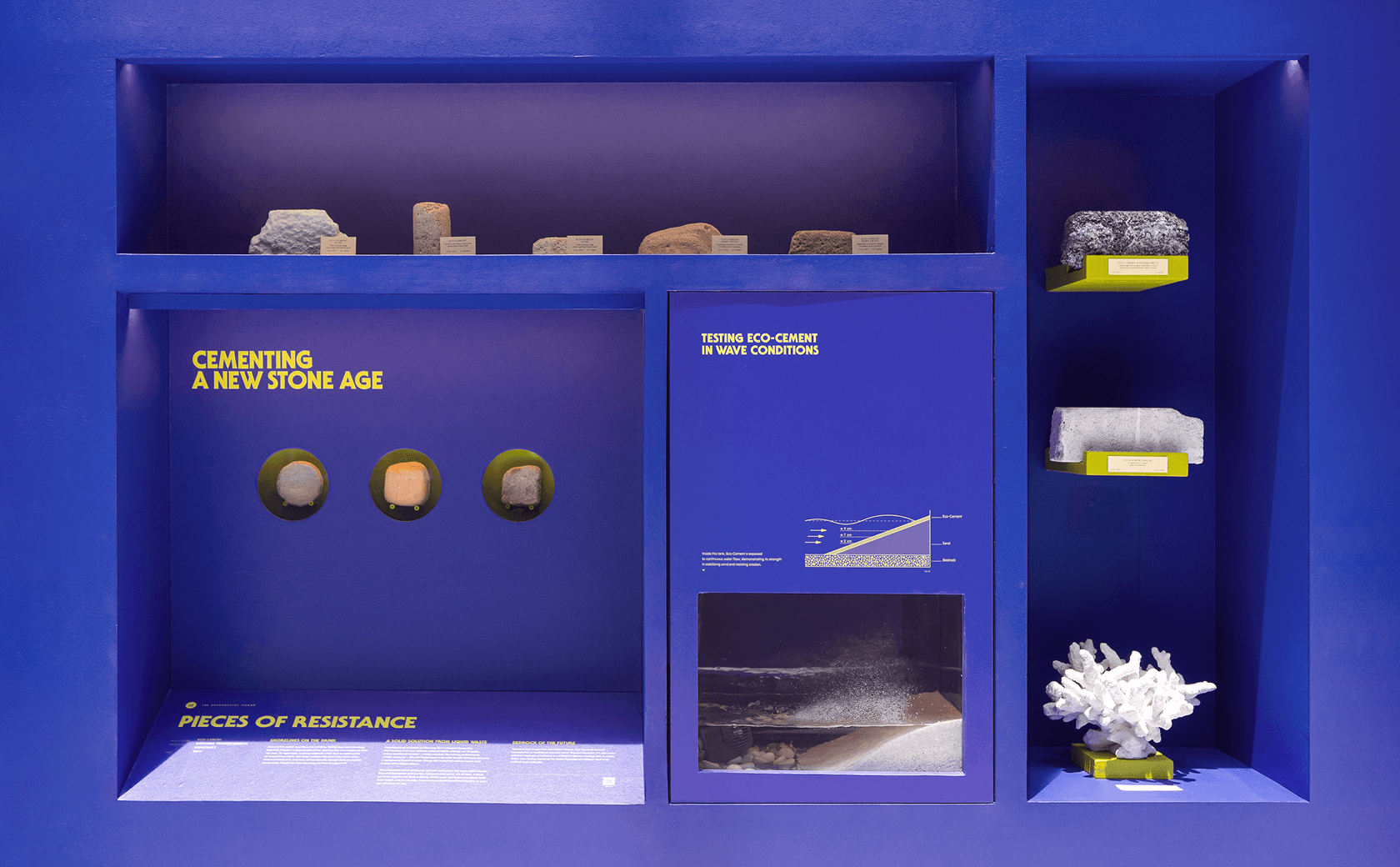
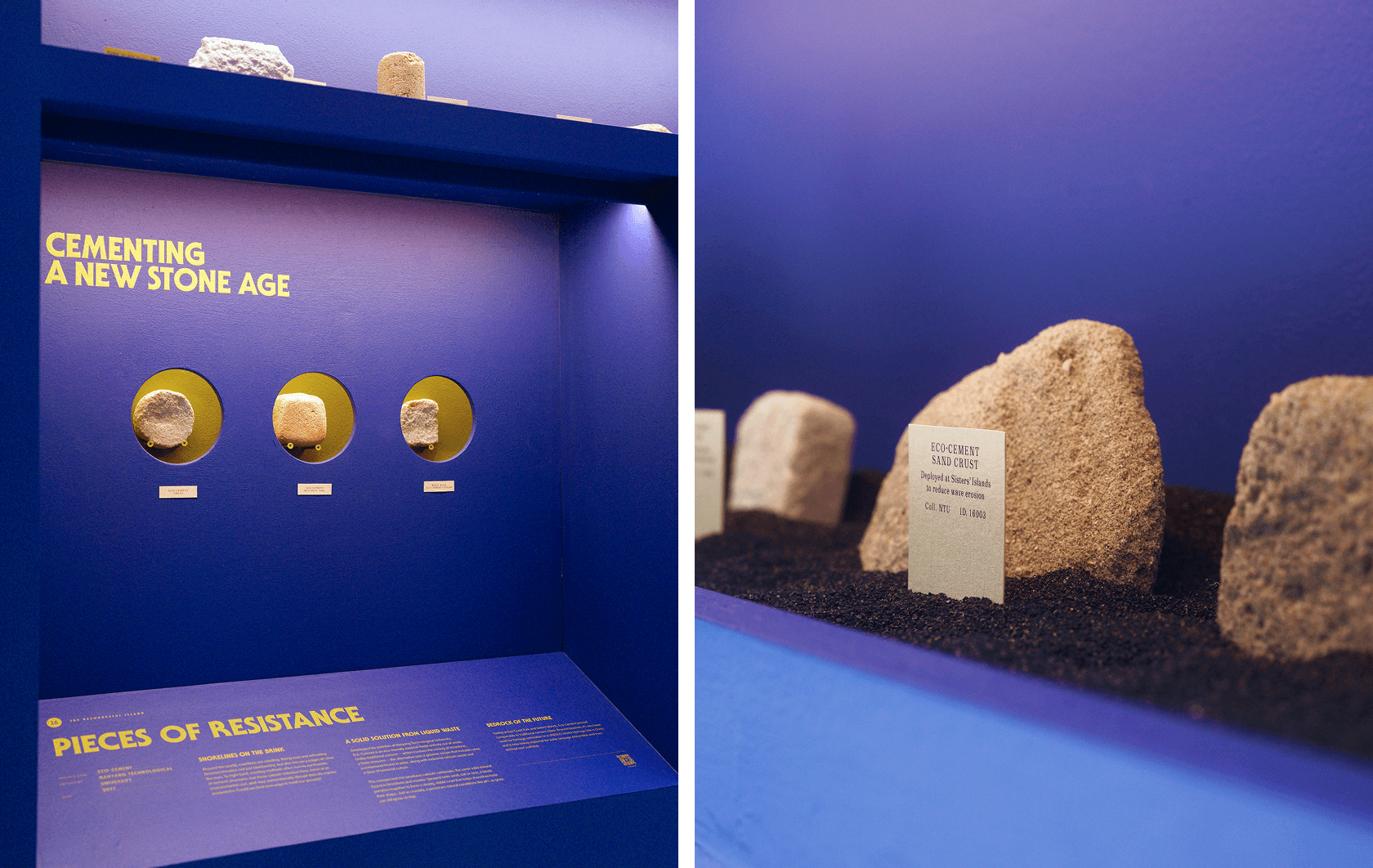
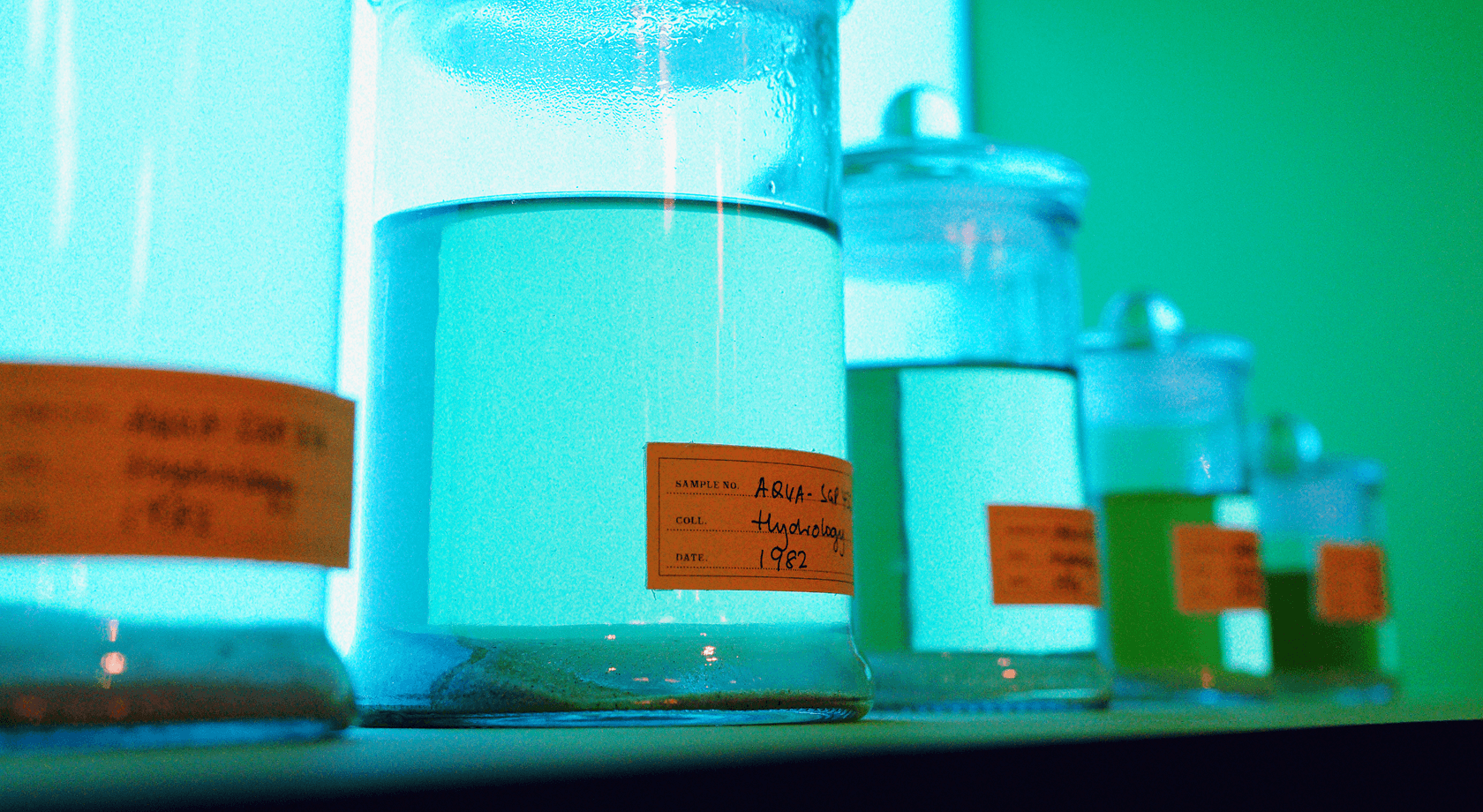
Derived from urine and other waste, these are no kidney stones but an eco bio-cement used to reinforce our shores against erosion. To demonstrate its effectiveness, we devise a coastal simulator that lets visitors see how it withstands the action of crashing water.
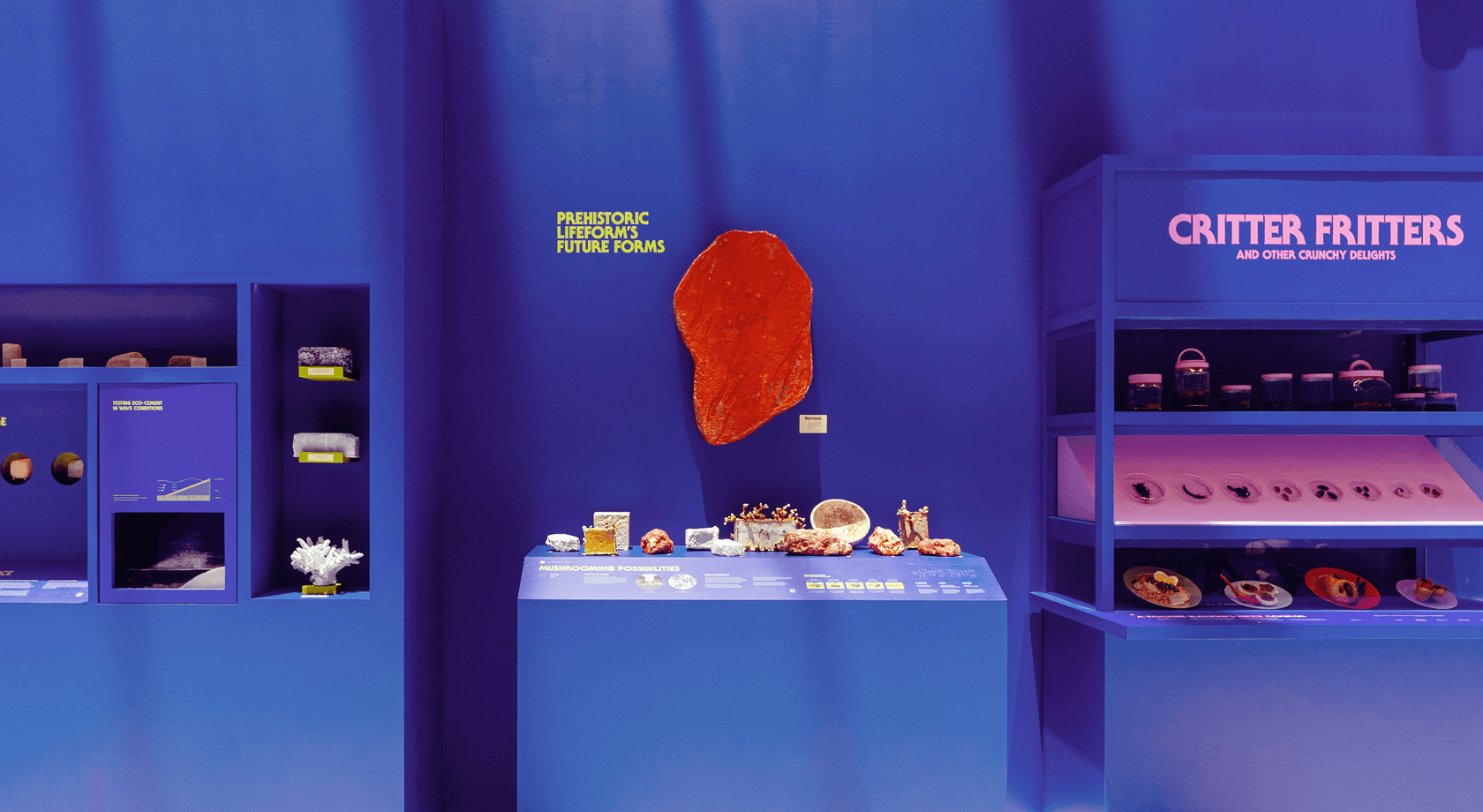
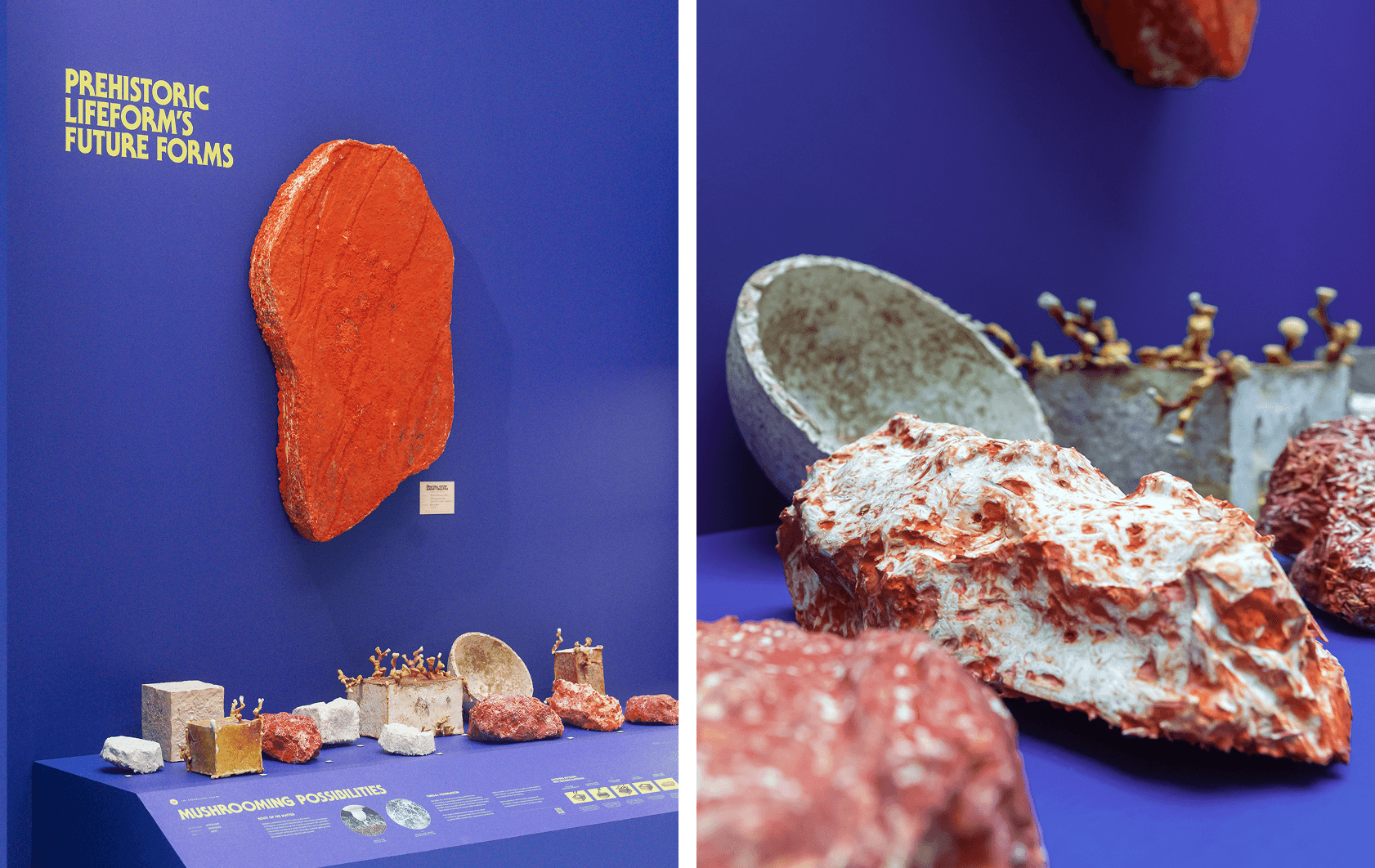
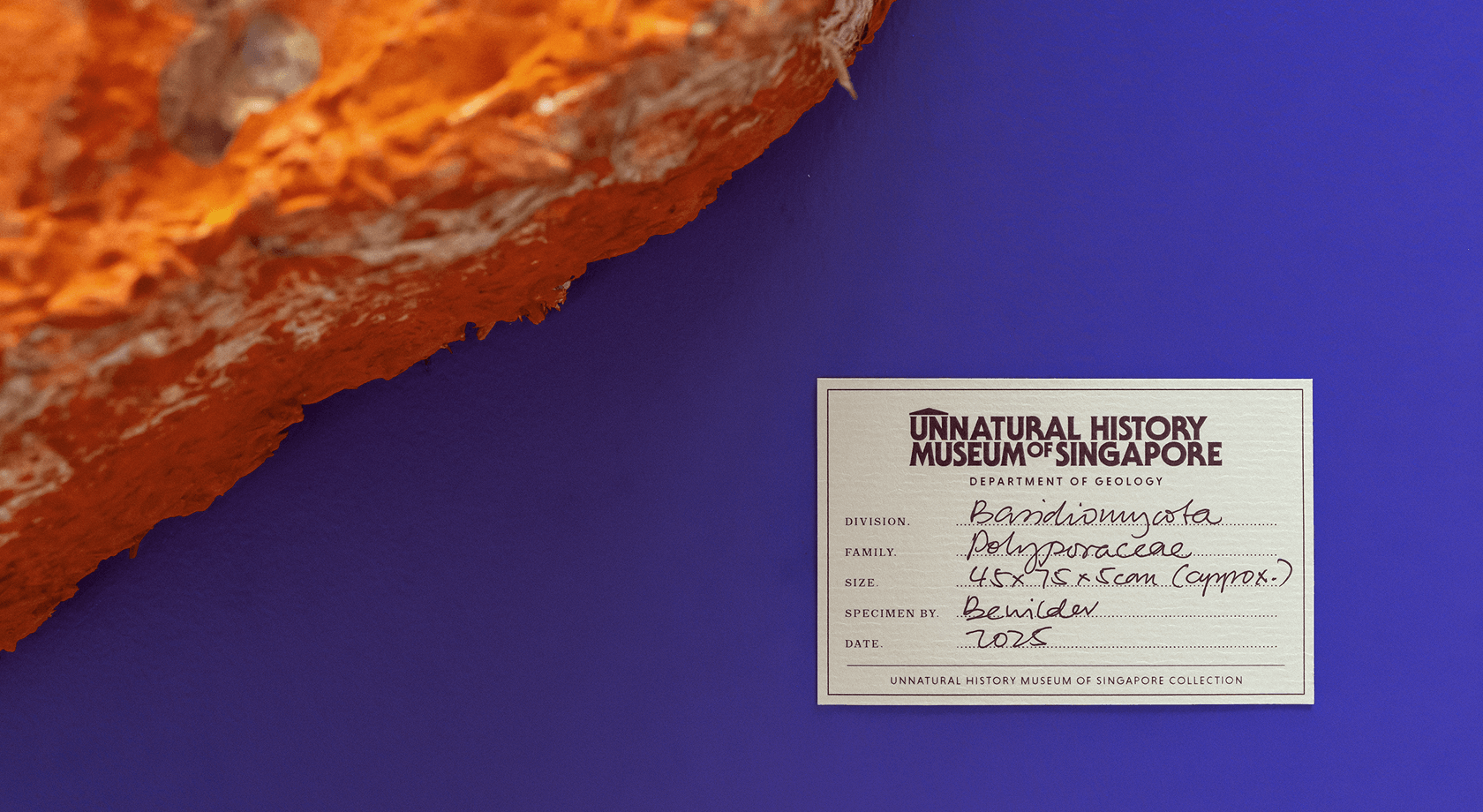
What appears to be a mineralogy collection is in fact an array of engineered mycelium. These root-like fungal networks are being explored as sustainable alternatives to conventional construction materials, offering a glimpse into a future where building blocks are grown rather than mined.
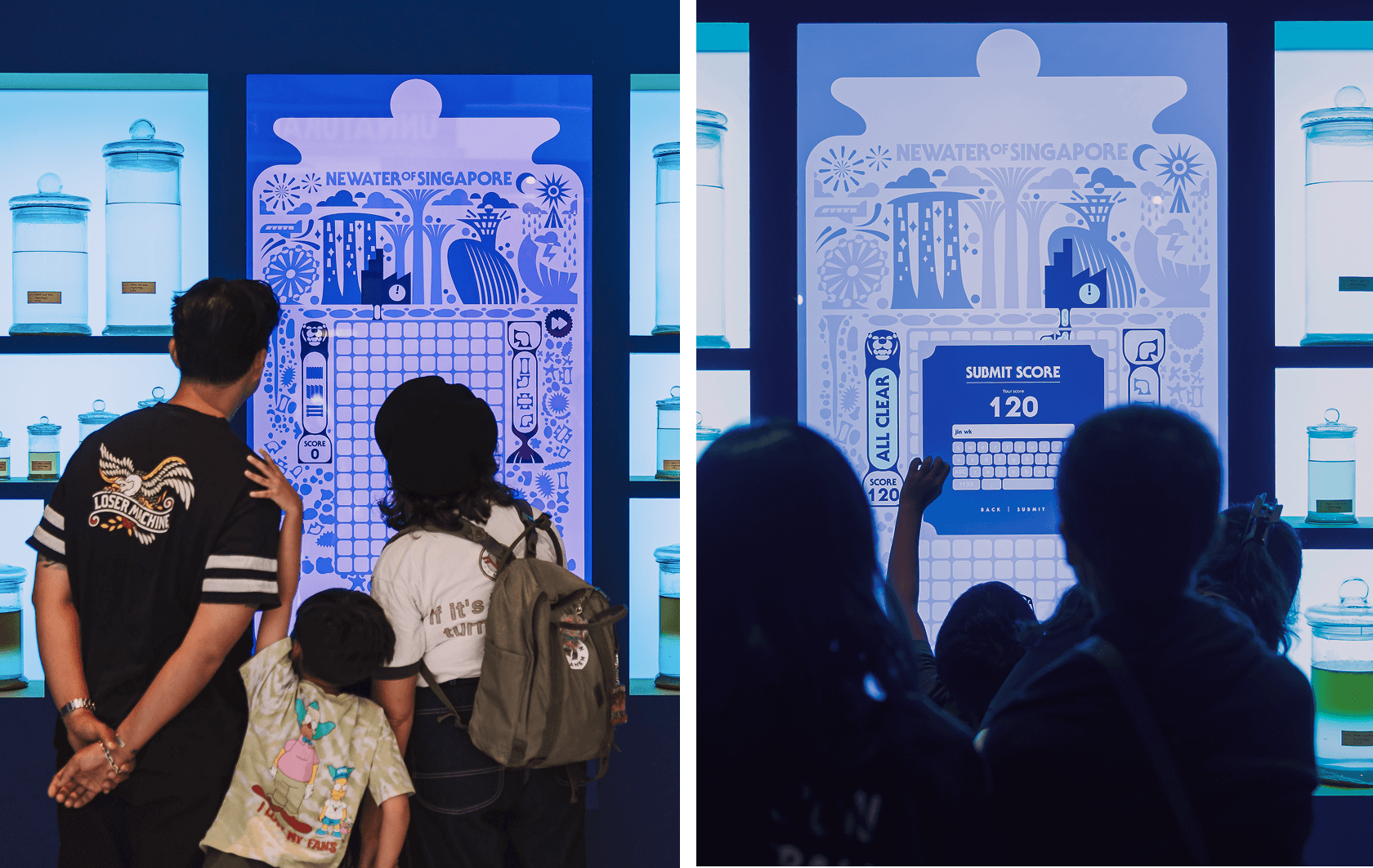
Drinkable water that comes from the loo? NEWater made global headlines for turning this unnatural idea into reality. We turn it into a game that cheekily puts Singapore’s water pipeline in the hands of the player.
“It’s all very playful, and a great reminder of the creativity (against incredible odds) that has brought Singapore so far.”
The Full 360 Experience
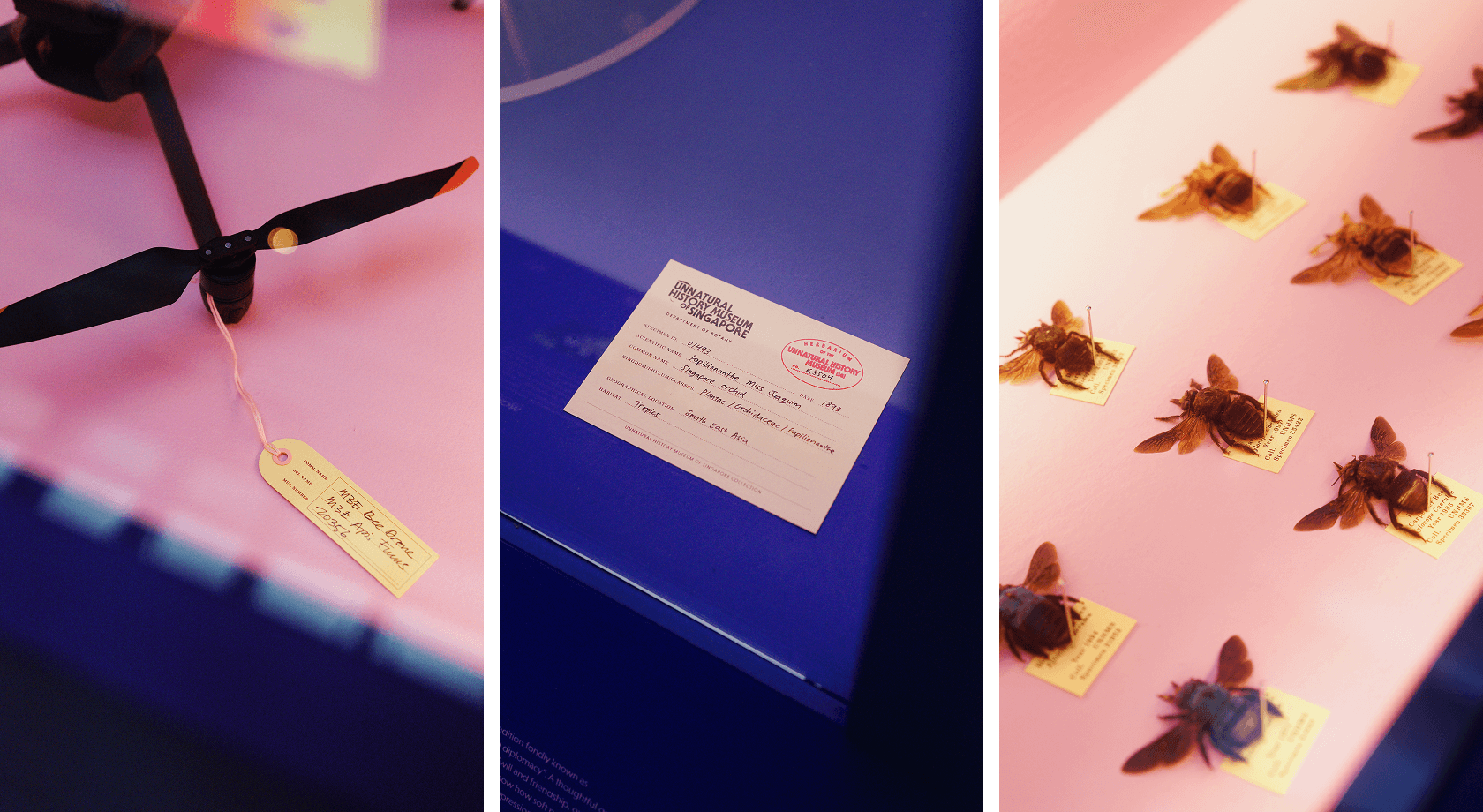
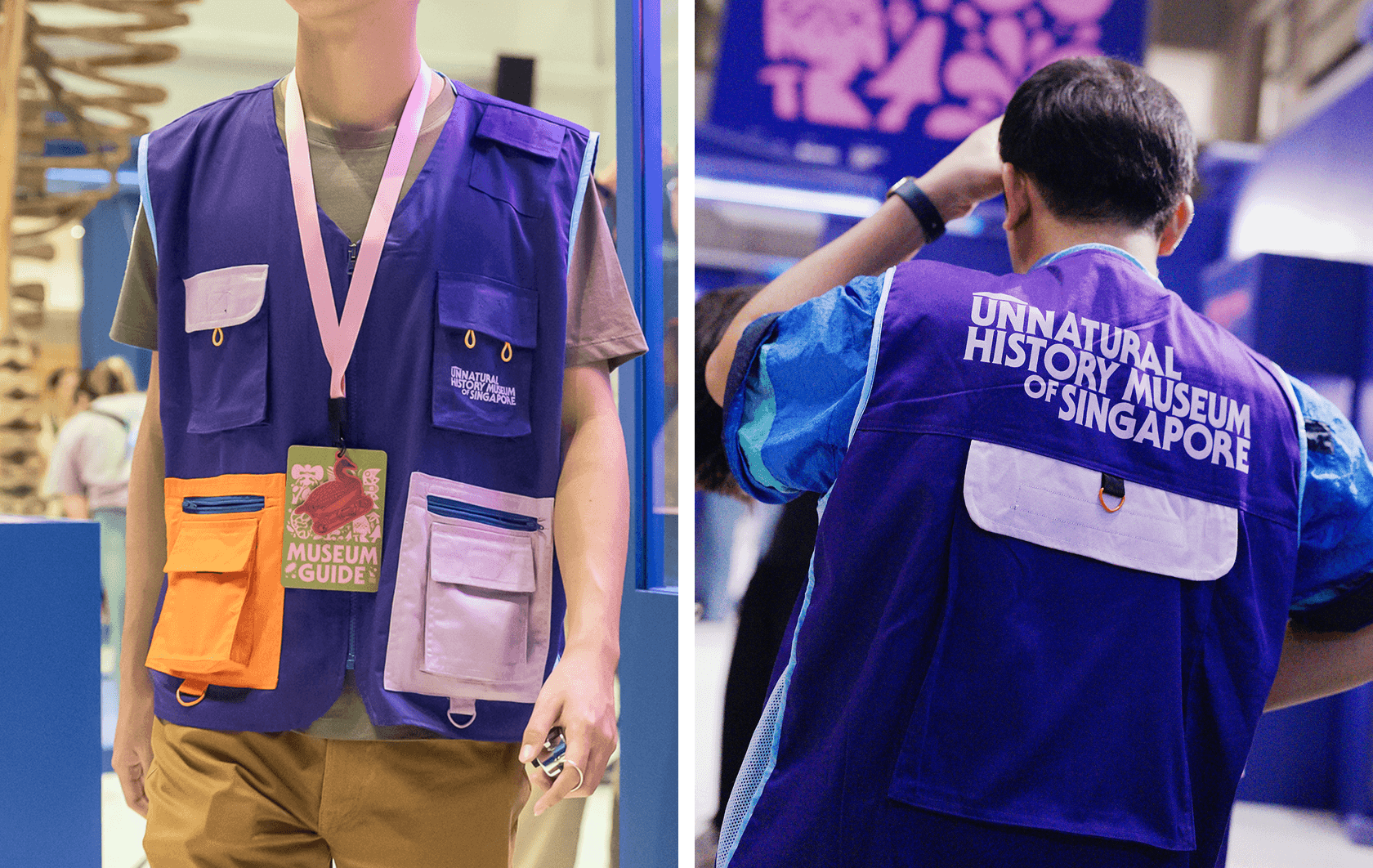
On top of the curation of the exhibits, we carefully designed every touchpoint to mirror a traditional natural history institution. From the Roman column-inspired entryway to posters featuring meticulous scientific illustrations, right down to small details like the handwritten specimen tags. We even had uniformed guides to lead tours around the museum.
“More than just a collection of curiosities, the exhibition is a celebration of design and ingenuity that have shaped Singapore’s evolution.”
“The Unnatural History Museum of Singapore:
How myths and marvels of the mind can shape Singapore’s next 60 years”